
Article
Back-up-Coat Slurry & Stucco Control
The coarser back-up coats build shell thickness and strength — where slurry consistency and stucco pick-up determine how fast and…

In investment casting, the prime (face) coat is the first coat to touch the wax pattern, and it sets the casting’s surface finish. That makes its viscosity one of the most important readings in the shell room.

In investment casting, the prime (face) coat is the first coat to touch the wax pattern, and it sets the casting’s surface finish. That makes its viscosity one of the most important readings in the shell room.
Investment casting slurries are non-Newtonian, and their viscosity drifts between checks. It rises as water evaporates, and it changes as the binder ages. A prime coat that runs too thin lets stucco through and roughens the casting surface. One that runs too thick traps air bubbles and can crack or spall.
Continuous inline viscosity tracking shows that drift before the next cup reading would catch it. In a published production deployment at Texas Precision Metalcraft (TPM), out-of-spec viscosity readings fell by 65%, and the foundry reported less measurement labor, better data, and less slurry waste. Measure any effect on surface quality against your own defect baseline in a trial.
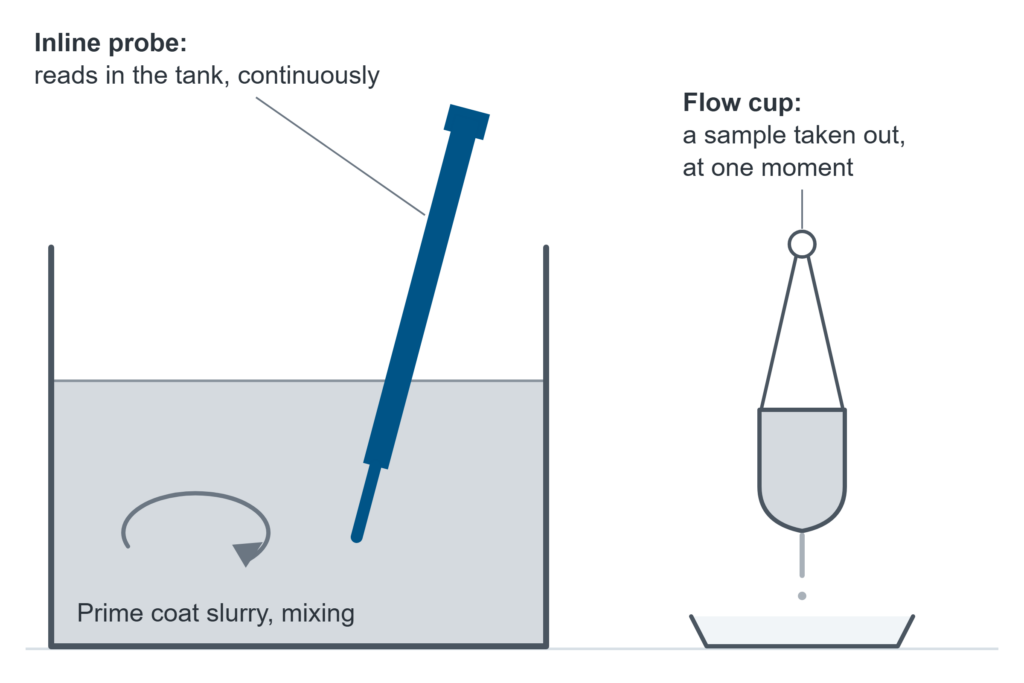
Figure 1. Inline viscosity tracking of investment-casting prime-coat slurry between Zahn-cup checks.
What the prime coat does
The first (prime or face) coat is the slurry layer that touches the wax pattern. After casting, it defines the surface finish and fine detail of the metal. It is a fine-grain, high-solids slurry, commonly fine zircon flour in a colloidal silica binder. It runs thicker than the back-up coats. Each shell room sets the cup size and the target band.
The higher viscosity builds a thicker, denser first layer, which gives a smoother casting surface. The wetting agent in the slurry is what wets the wax.
How it is checked and adjusted today
Shell rooms check prime coat viscosity regularly with a Zahn cup. Some check every shift, some as often as every hour, and one published testing guideline calls for a minimum of twice a day. The slurry is made up by adding refractory flour slowly to the binder, the final viscosity is adjusted with binder or flour, and water is added to make up for evaporation.
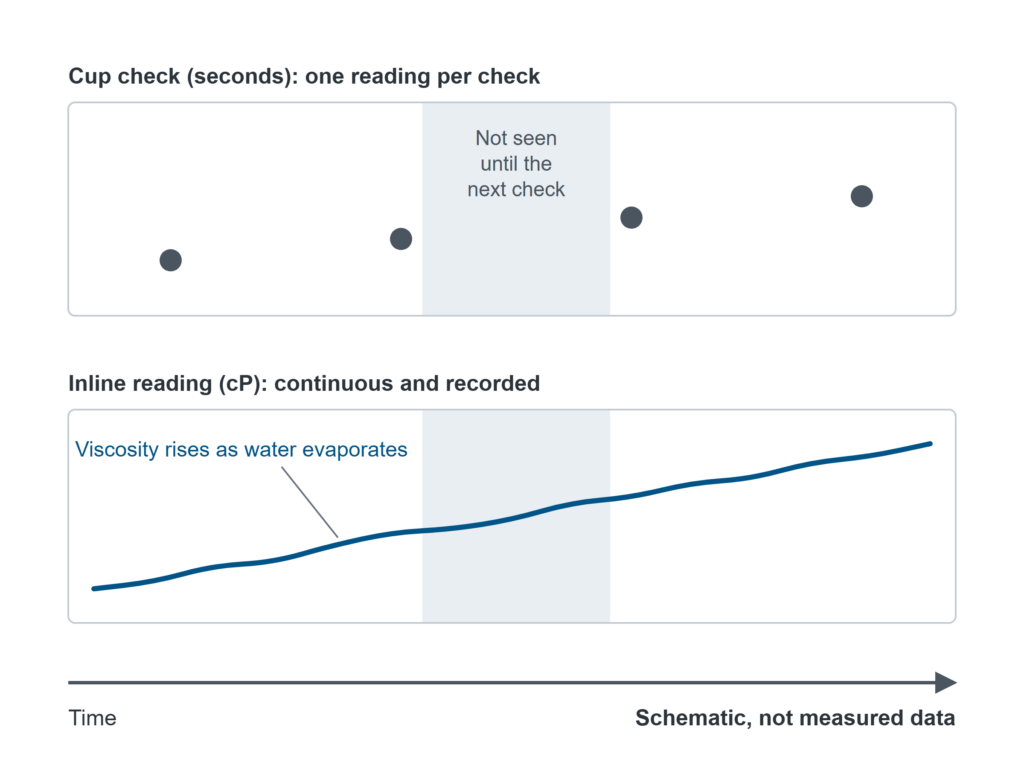
Investment casting slurries are non-Newtonian. Between checks, their viscosity drifts: it rises as water evaporates and changes as the binder ages.
If the prime coat slurry runs too thick, the layer builds too heavy. It traps air bubbles, is slow to dry, and can crack or spall. If it runs too thin, it drains off before it can build a sound face, and stucco can push through the layer and roughen the casting surface.
A Zahn or flow cup is a manual spot check, done periodically. It measures a sample taken out of the tank at one moment, not the slurry as it is being used. The result varies with operator technique, timing, and slurry temperature, and the cup has to be kept clean. Meanwhile, the slurry in the tank keeps drifting.
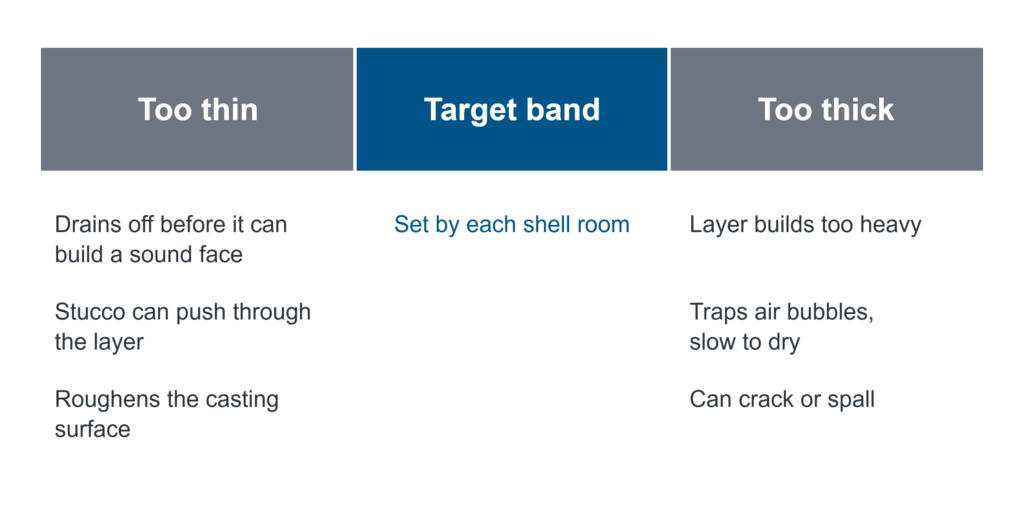
A stable prime coat viscosity means a more consistent casting surface.
Viscosity measured in the tank
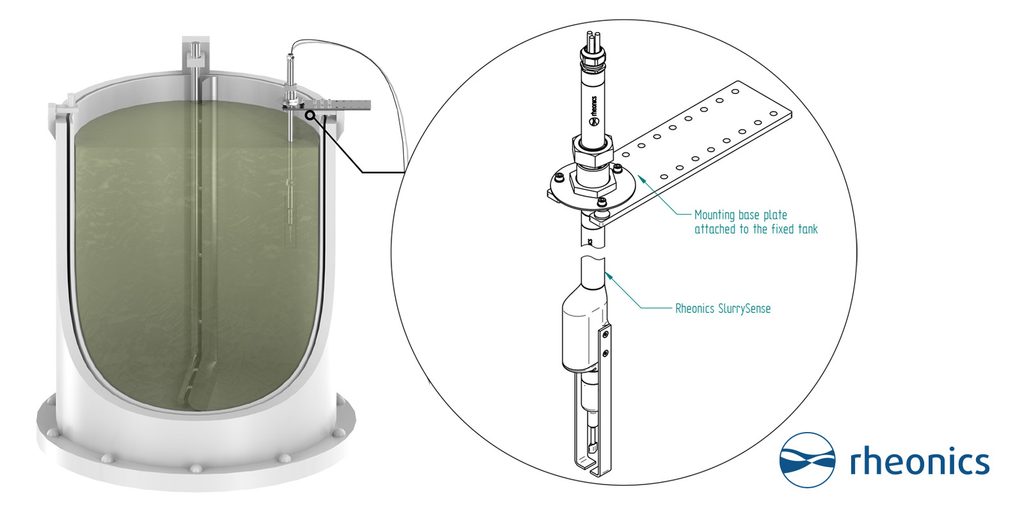
The SRV measures viscosity inline with a balanced torsional resonator (BTR) that has no moving parts. It measures in the tank while the slurry is mixing, so the reading reflects the slurry as it is being used. The probe also reads temperature at its tip, because viscosity and density both depend on it.
Prime slurries are made to stick, and they deposit on anything left in the tank, a sensor included. For these slurries, Rheonics offers SlurrySense. It pairs the probe with the CleanWave module, which uses pneumatic vibration to keep deposits off the sensing element while the probe measures.
Density, and how the reading compares with the cup
The SRD adds density, which tracks solids content alongside viscosity. Both matter for the coat. A more viscous slurry runs off the pattern more slowly, and a heavier one runs off faster, so together they set how much slurry stays on.
The inline reading is in centipoise (cP) and is taken at a much higher shear rate than a cup, so it is not the same number as cup seconds. It follows the same trend, though, and a shell room can relate the two by running both in parallel on its own tank. Plate weight remains a useful second check alongside viscosity.
Drift seen early, one reading for everyone
Inline measurement is continuous and recorded, so drift from evaporation or aging shows as it starts instead of at the next cup check. Every operator sees the same reading. The result does not depend on who ran the test or how long the sample sat.
Results in production at TPM
In a production deployment at Texas Precision Metalcraft (TPM), a SlurrySense SRD paired with Nalco’s 3D TRASAR controller measured the prime slurry alongside the shell room’s ISO 8 cup. After the foundry set up monitoring and notification, out-of-spec viscosity readings fell from 0.34% to 0.12%, a 65% reduction. The foundry reported less measurement labor, better data, and less slurry waste. With readings it could trust, TPM went on to automate its water additions. The sensor reports the reading, and dosing is a separate control step.
The results are in the joint paper by Nalco, Rheonics, and TPM presented at ICI 2025. To judge any effect on surface quality, run a trial and measure it against your own defect baseline. For more detail, see our main article on ceramic slurry viscosity and density.
| What matters | Rheonics SRV/SRD | Flow cup (manual check) |
|---|---|---|
| Measurement cadence | Continuous inline viscosity (and density with the SRD) | Periodic manual cup checks |
| Operator variation | Same reading for every operator | Result depends on technique and timing |
| Drift detection | Real time; evaporation and aging seen as they develop | Only at the next scheduled cup check |
| Maintenance | No moving parts; SlurrySense with CleanWave is self-cleaning | Cups cleaned and timed by hand |
General product characteristics. Confirm exact specifications and certificates for your configuration with Rheonics. Inline viscosity and density support, and do not replace, flow cup, plate weight, and qualified shell and casting acceptance tests.
Prime coat slurry viscosity is mostly checked with a Zahn or flow cup, every shift or even every hour depending on the shell room. Operators adjust with binder, flour, or water to bring the reading back into the target band. Plate weight is checked alongside the cup.
The prime coat is the only coat in direct contact with the wax pattern, and later with the metal. A thin or uneven prime layer lets stucco through, and that shows up as a rough casting surface.
Inline viscosity measurement adds a continuous, recorded reading between the periodic spot checks. Drift from evaporation or aging is visible as it happens. Operator technique and sample timing play no part in the inline reading.
No. Inline viscosity shows what the slurry is doing between checks. Flow cup, plate weight, and your qualified shell and casting acceptance tests remain the reference.
ASTM D4212 covers Zahn dip cups, and ICI Test Procedure 720-79 covers the plate weight test.
The binder is usually colloidal silica: nanoscale silica particles suspended in water, typically supplied at about 30% SiO₂ and run close to that in the slurry. On drying, the particles bond to the refractory grains and hold them together.
| Parameter | Typical value / standard | Measurement note |
|---|---|---|
| Prime coat viscosity | Set by each shell room; for example, around 24–30 s on a Zahn cup (ASTM D4212) | Inline reading is in cP and follows the cup trend; relate the two on your own tank |
| Binder | Colloidal silica, supplied at about 30% SiO₂, water based | Density tracks solids loading alongside viscosity |
| Adjustment | Flour added slowly at make-up; final trim with binder or flour; water to replace evaporation | Inline reading shows each addition as it mixes in |
| Role | Face coat with the finest refractory; sets the casting surface finish | Drift here shows on the casting surface |
Indicative values for orientation. Confirm your shell room’s own targets and qualified procedures. Inline viscosity and density support, and do not replace, flow cup, plate weight, and qualified shell and casting acceptance tests.