
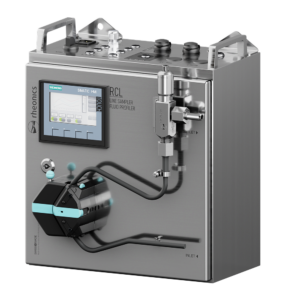
ReCircLine™ System
All-in-one recirculation line with SRV sensor
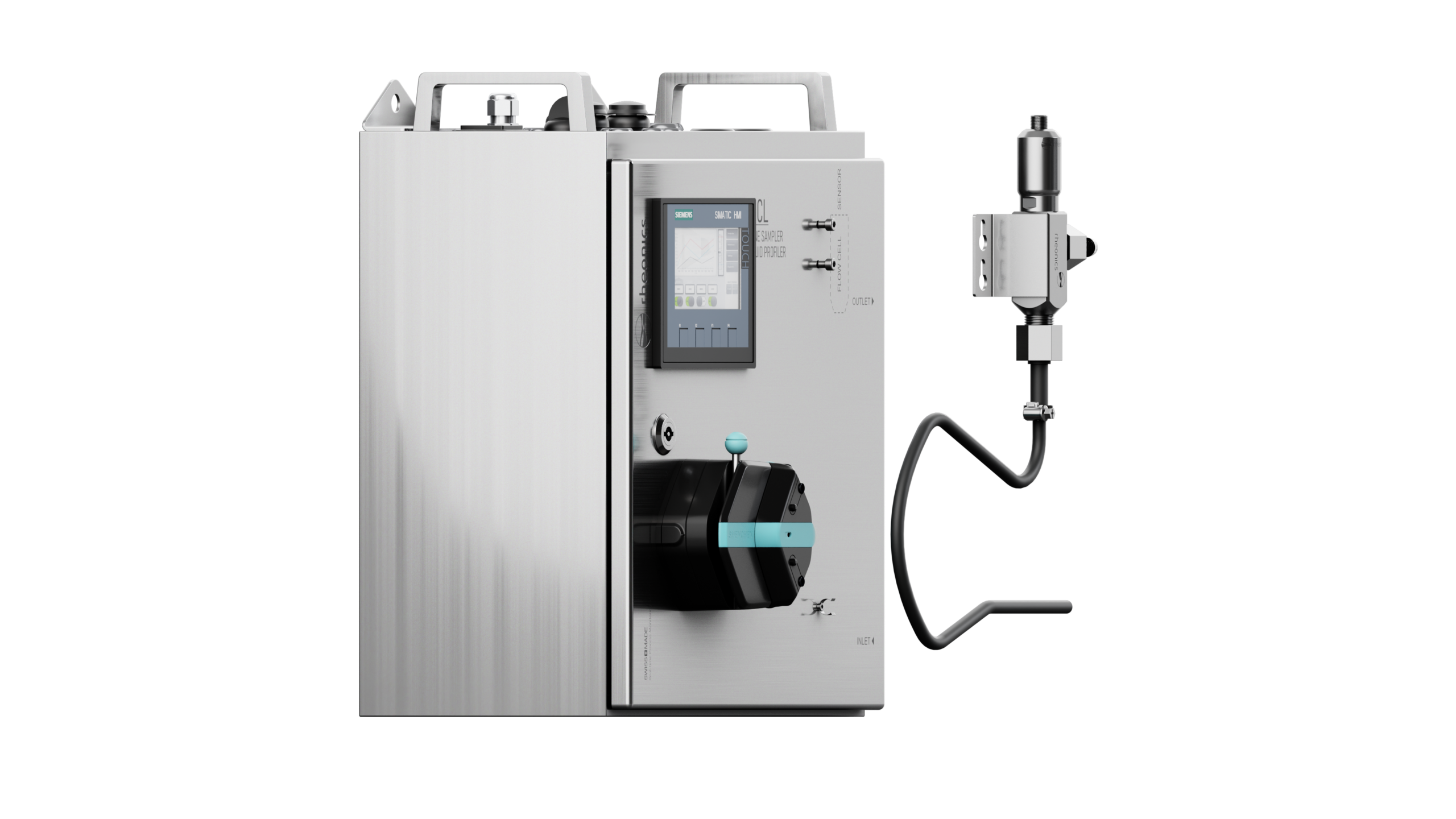
Extract a controlled, representative slipstream for stable, repeatable viscosity and temperature measurements, even where a direct inline probe cannot be installed.
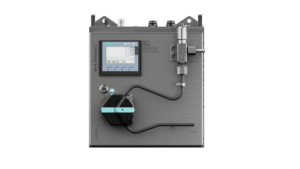
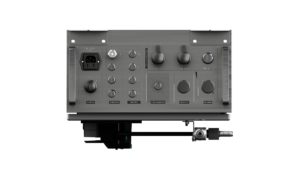
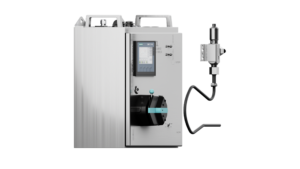
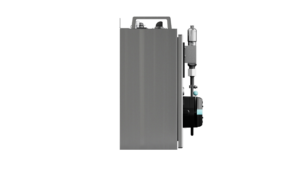
Overview
Measure where a direct probe can’t go
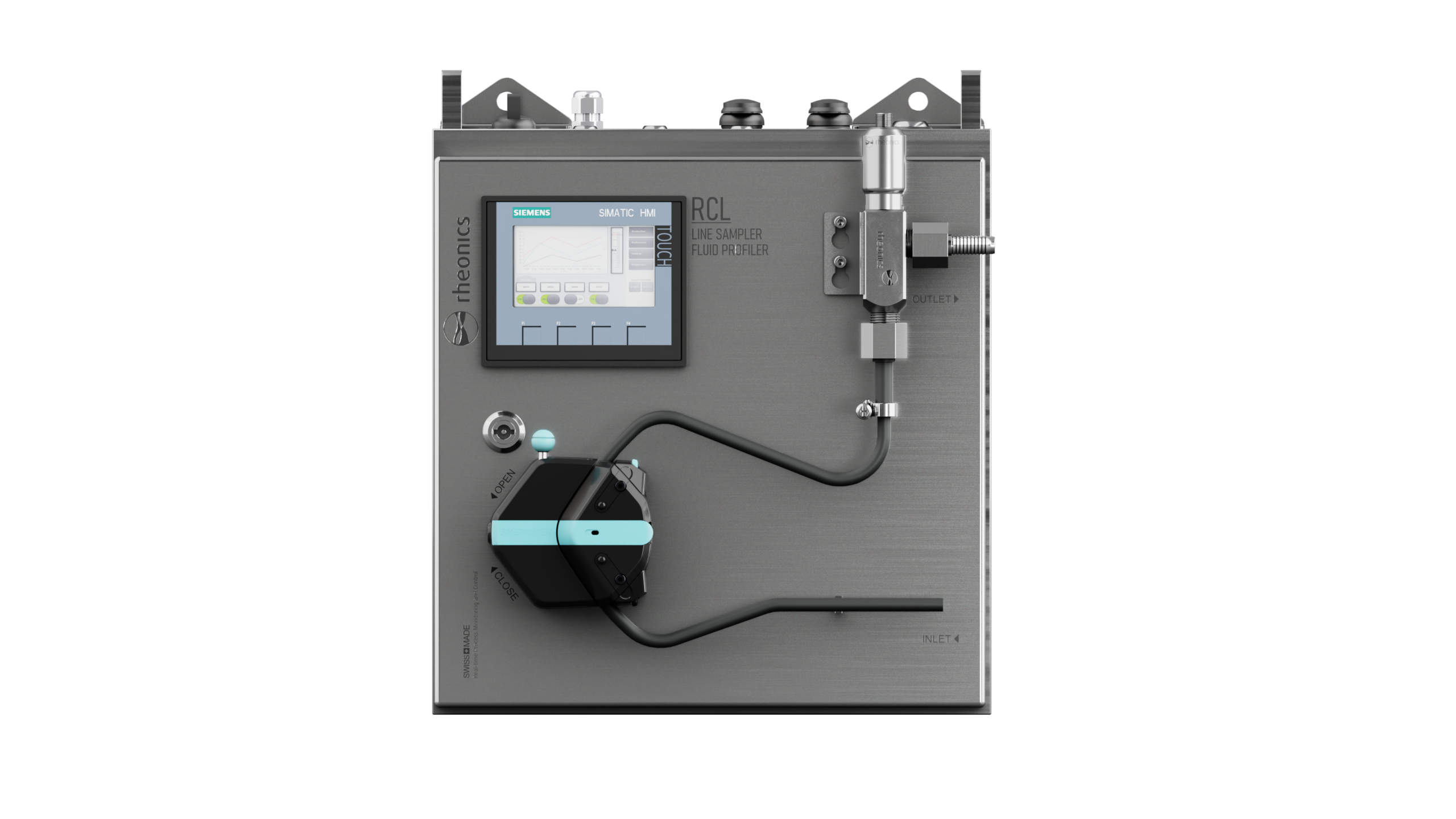
The ReCircLine system enables fluid measurements in tanks or process lines where a direct sensor probe installation is not feasible, for example, when a mixer occupies the vessel. A Rheonics inline viscometer sits inside the loop and delivers stable, repeatable measurements under controlled flow, independent of disturbances in the main process line or tank.
The outlet can be routed back to the process, to the tank, or to a waste bucket, giving you flexible integration without touching total production throughput.


Operation
Steady-state flow for reliable readings
For non-Newtonian fluids, viscosity is shear-rate dependent and therefore flow-dependent, so measurements should be taken under constant, steady-state flow. The value of interest is viscosity at steady flow — start-up and static behavior are typically not relevant. ReCircLine supports three operating modes, each capable of delivering that stable flow.


How it works

Flow that never breaks
Continuous, pulse or intermittent modes deliver the steady flow required for reliable readings.
Reliability

Wide viscosity range
Integrated SRV measures up to 250,000 cP across a broad set of process fluids.
Connectivity

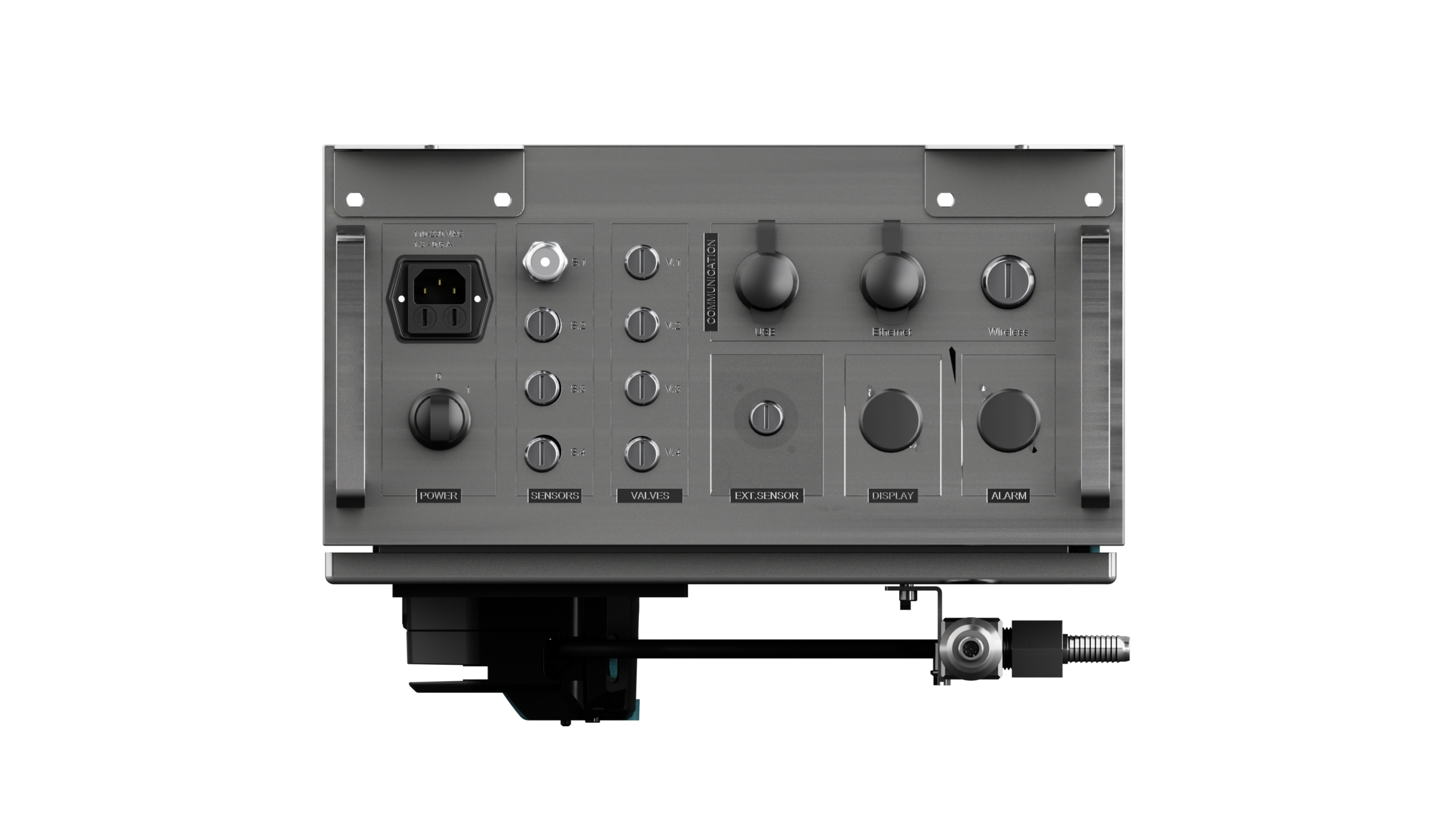
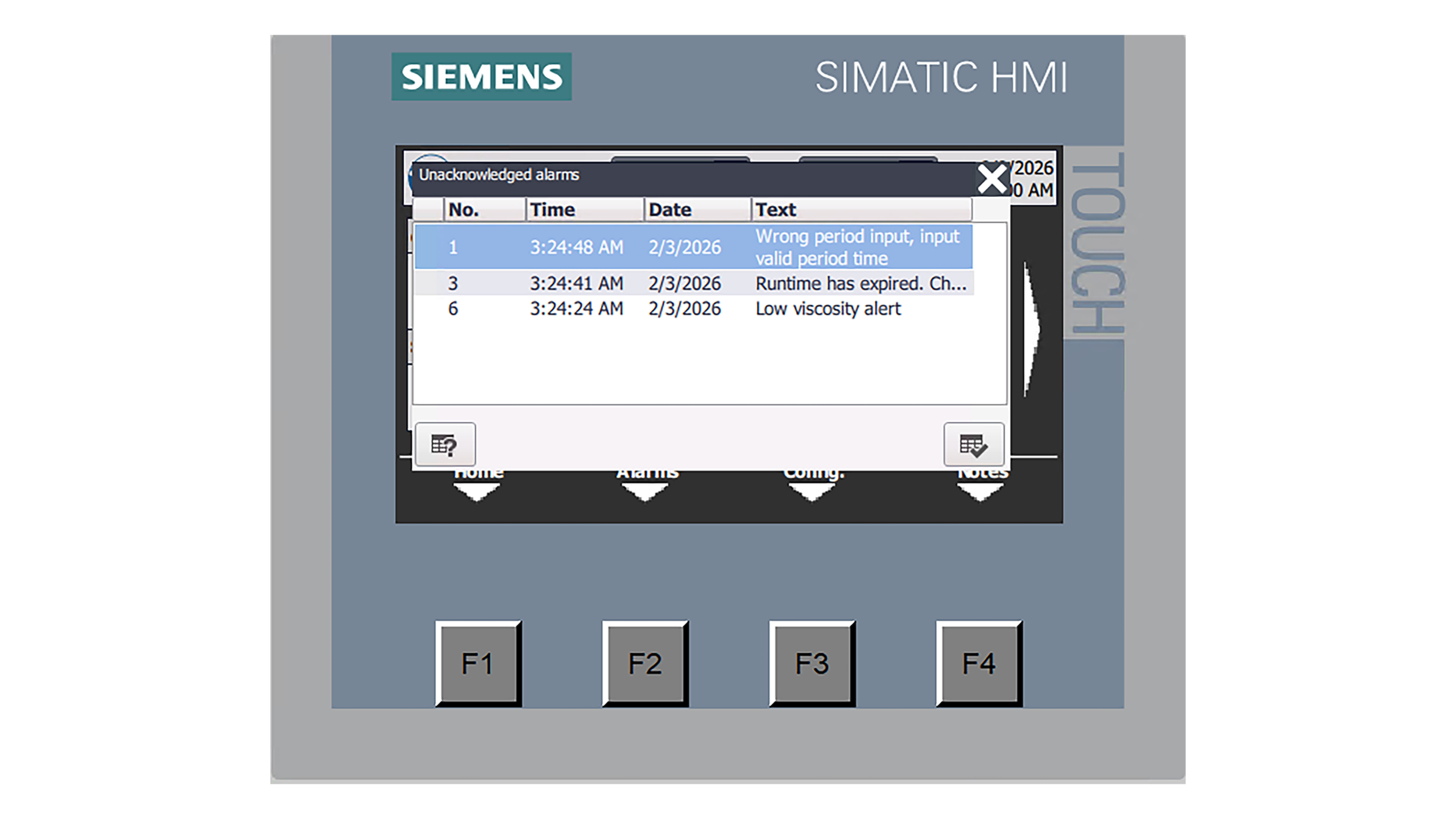
Siemens PLC + HMI
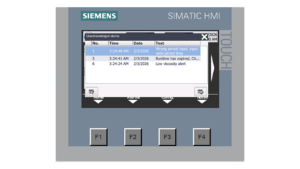
4.3″ touchscreen for live viscosity, temperature and full pump control.
Design

Portable & serviceable
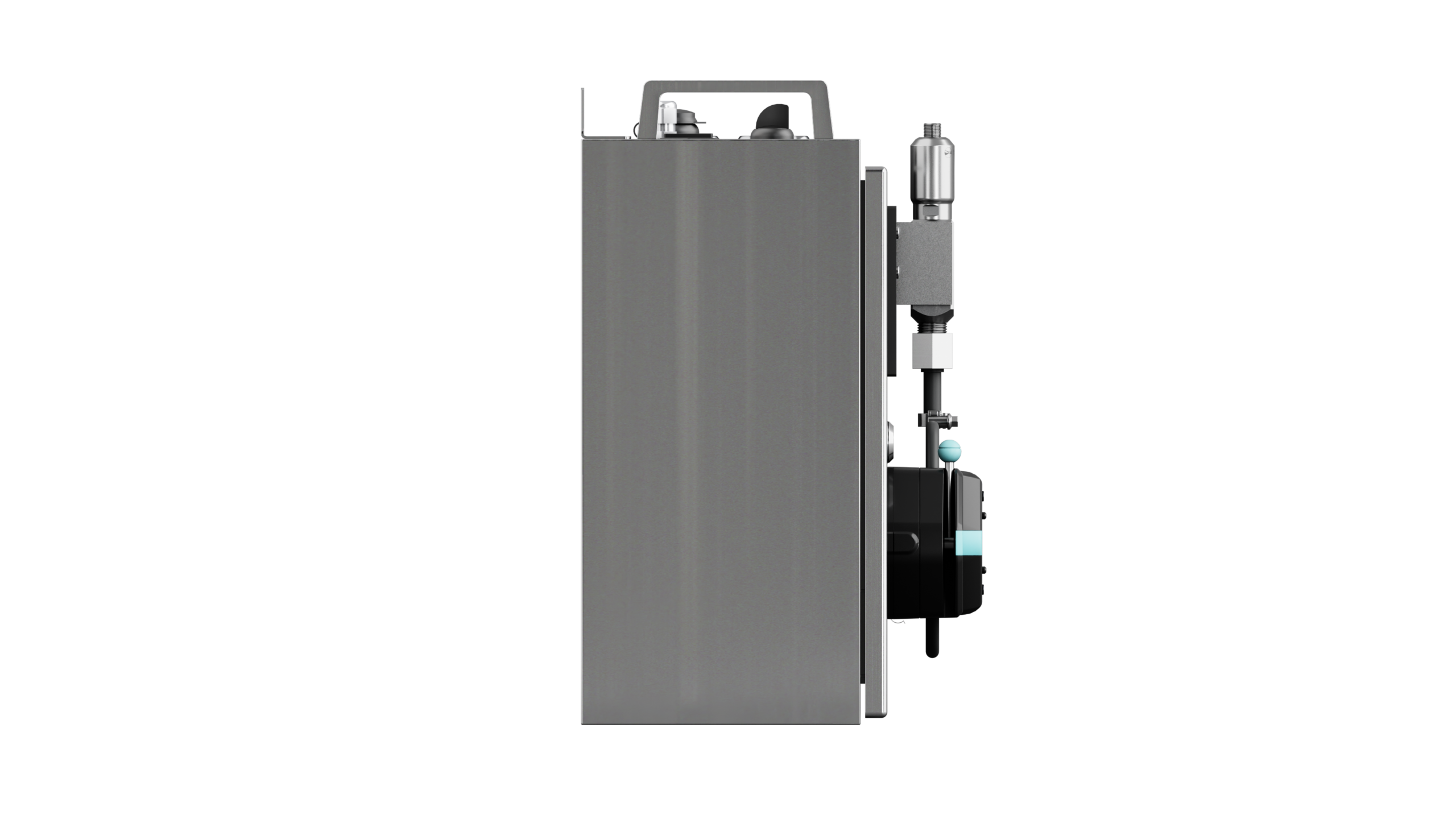
17 kg cabinet with carry handles; quick assembly and disassembly for cleaning.
Applications
Where ReCircLine fits
The RCL extracts a controlled, representative slipstream to enable real-time monitoring where direct inline installation is impossible.
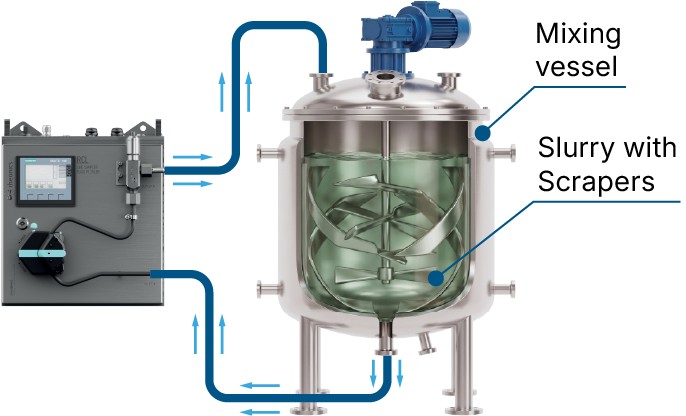
01 Sampling mixing vessels
Battery cathode/anode slurry mixers or chocolate conches where moving helical blades continuously sweep the vessel walls.
Installation point
Connect bypass to sampling port. Loop through RCL, return separately.
Key benefit
Ideal for vessels with moving blades that would damage stationary sensors.
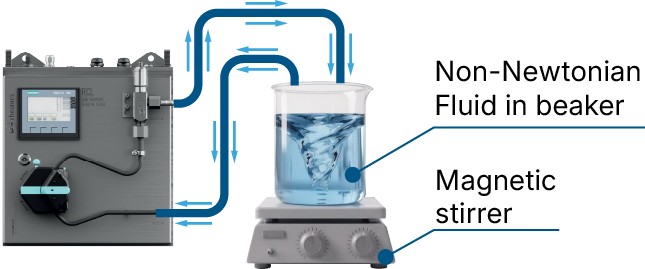
02 Characterizing shear-sensitive fluids
Generating viscosity curves for specialized polymers, cosmetic gels or complex coatings without interrupting main production.
Installation point
Draw fluid into RCL. Vary flow rates to map profiles.
Key benefit
Measures non-Newtonian fluids with flow-dependent viscosity changes.
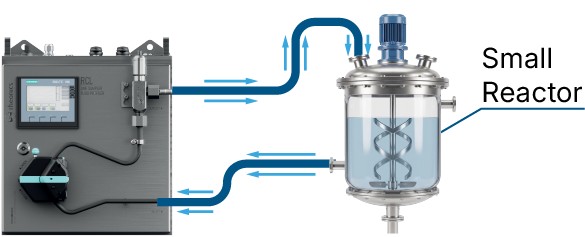
03 Monitoring small-scale vessels & reactors
Pilot-scale chemical synthesis or pharmaceutical research reactors where space is tight and standard probes disrupt internal mixing dynamics.
Installation point
Route bypass from bottom port through RCL back to top.
Key benefit
Perfect for small reactors lacking space for direct-insertion probes.
04 Monitoring fouling-prone or sticky fluids
Two-part adhesive lines for medical island dressings, using a Y-junction to divert a slipstream for on-demand curing analysis.
Installation point
Divert a slipstream through a Y-junction; route the outlet to waste so curing or fouling fluid never returns to the line.
Key benefit
Isolate and purge the loop between samples, no permanently wetted probe to foul, and no risk of buildup in the main process.
