
Back-up Coat Slurry & Stucco Control
In investment casting, the back-up coats build the shell’s thickness and strength. The slurry consistency and stucco pick-up ratio determine how fast and how soundly the shell grows.

In investment casting, the back-up coats build the shell’s thickness and strength. The slurry consistency and stucco pick-up ratio determine how fast and how soundly the shell grows. The back-up slurry and stucco are the later layers of the ceramic shell that are built up around the wax pattern after it has been immersed in the initial “prime coat” layer.
Holding the back-up coat viscosity on target with continuous inline monitoring removes the gaps and operator-to-operator scatter of periodic Zahn-cup checks, so coat thickness stays even and the common shell faults — bulging, cracking and inter-coat delamination — have less room to start. The yield and uptime ratio gains from a steadier shell build are real with Rheonics inline viscosity and density sensors.
Process context
After the fine prime coat is down, successive back-up coats build the load-bearing thickness of the ceramic shell. Back-up slurry uses a coarser refractory — commonly fused silica — and is run thinner than the prime coat, typically around 12–15 seconds on a No. 5 Zahn cup, so it drains and builds at the right rate per dip. Each wet coat is then stuccoed with dry refractory sand, which keys mechanically into the slurry film and gives the next coat a rough surface to bond to.
Back-up viscosity also governs how much slurry clings to the part on each dip, and therefore the shell build per coat: too thick and the coat over-builds, draping unevenly and trapping locked-in stress and drying defects; too thin and it under-builds, leaving the shell short of strength. Because the slurry is thixotropic, the effective pick-up also depends on shear and rest history, so a single periodic cup reading can mislead. A continuous inline viscosity reading holds the back-up slurry inside its target band and keeps the build predictable coat-to-coat.
Back-up coat’s viscosity = build per coat
Hold the back-up viscosity so the shell builds the planned thickness in each coat — neither over- nor under-built.
Current situation
Stucco grain size, application and inter-coat drying (humidity and temperature) are controlled separately — see the stucco/drying article — but they all build on the slurry film that the dip lays down, so inline viscosity controls the pick-up underneath them. Plate weight stays a useful correlated reference, sampled against the continuous viscosity trend rather than in place of it.
Rheonics solution
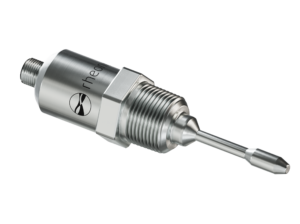
The Rheonics SRV inline viscometer holds back-up viscosity inline using a balanced torsional resonator (BTR) with no moving parts, robust and with optional self-cleaning technology in the abrasive, fouling slurry; the Rheonics SRD adds density and specific gravity measurements to follow solids loading. See the prime-coat article and the shell-building cycle flagship.
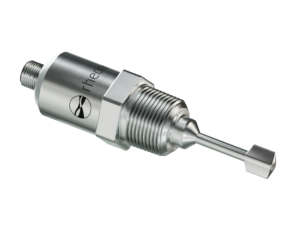
Rheonics SRD
In depth: standards, figures and practice
Back-up coats build the shell’s thickness and strength over the prime coat, using a coarser refractory and a thinner viscosity target — an example is around 12–15 s on a No. 5 Zahn cup, lower than the prime coat because these layers build bulk rather than surface finish. Each wet coat is stuccoed with dry refractory sand, and consistent slurry pick-up — driven by viscosity — gives a consistent stucco bond and a repeatable build per coat. If back-up viscosity drifts, coat thickness and the number of coats needed to reach shell strength drift with it. Continuous inline viscosity in the back-up tank keeps each coat repeatable and stabilises the whole shell-building cycle.
Why Rheonics?
| Considerations | Rheonics SRV/SRD | Typical alternative |
|---|---|---|
| Mounting & vibration | Balanced torsional resonator — insensitive to mounting position and pipe vibration | Many inline/lab instruments are mounting- and vibration-sensitive |
| Properties measured | Density, viscosity and temperature from one probe (SRD); wide-range inline viscosity and temperature (SRV) | Often one property per instrument |
| Maintenance | No moving parts; easy to clean; no routine recalibration, self-cleaning technology available | Optics, tubes or sources may need cleaning, recalibration or licensing |
| Hazardous areas | Intrinsic Safety (ATEX, IECEx, Hazloc) available | Varies by device |
General product characteristics; confirm exact specifications and certificates for your configuration with Rheonics. Inline measurement supports, and does not replace, validated or compendial QC.
Frequently asked questions
What viscosity do back-up coats run at?
A thinner, lower target than the prime coat. The back-up slurry uses a coarser refractory and builds shell thickness and strength rather than surface finish.
How does viscosity affect stucco?
Slurry pick-up is driven by viscosity, and consistent pick-up gives a consistent stucco (sand) bond on each coat or bath — the wet film has to be thick enough for the grain to key in but not so thick it sloughs. Drift in viscosity changes pick-up, coat thickness and the bond, so controlling viscosity stabilises the build.
Why to control back-up viscosity continuously?
Because coat-to-coat consistency determines how many coats are needed to reach shell strength and how uniform the finished shell is. Inline viscosity keeps every coat repeatable instead of relying on periodic cup checks that can miss drift between dips.
Does this replace shell-strength testing?
No. Shell strength and permeability remain qualified acceptance tests. Inline viscosity is the continuous process-control signal that makes each coat repeatable and the shell build predictable between those tests.
Across the Rheonics Knowledge Centre
Related content