
Colloidal Silica vs Ethyl Silicate Binder Systems
A reference on how binder chemistry affects slurry behaviour, and how inline measurement keeps the dip under control with either system.
Binder chemistry shapes slurry rheology, ageing behaviour and how tightly the slurry can be controlled. Water-based colloidal silica is the standard binder today, and alcohol-based ethyl silicate is used mainly for fast-set applications. In both systems, the dip is controlled by slurry viscosity, so inline measurement applies to either.
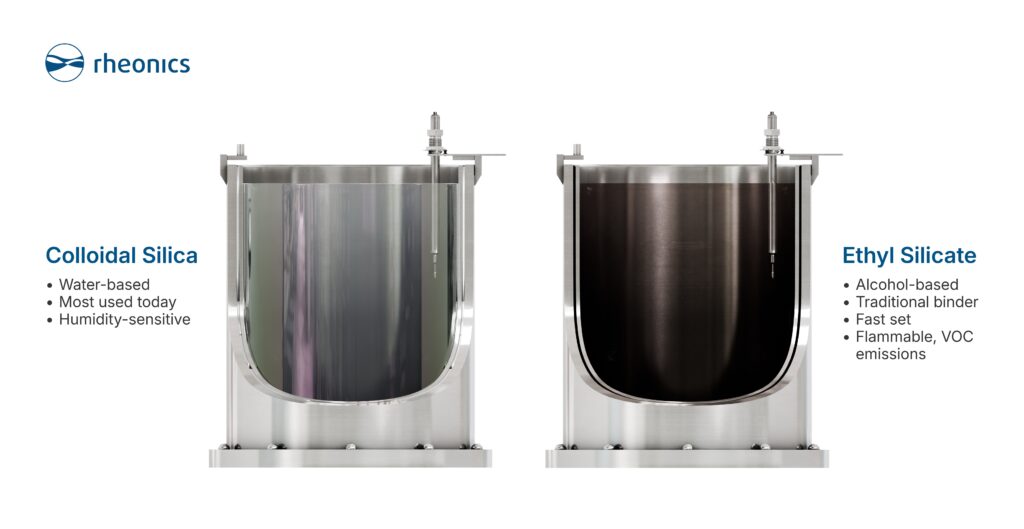
Figure 1. Binder systems for investment-casting slurry: colloidal silica (silica sol, water-based) vs ethyl silicate (alcohol-based).
Binder choice shapes the slurry
The binder holds the refractory grains together and, on firing, sets the shell. Most modern shell rooms run water-based colloidal silica (silica sol) systems. Alcohol-based ethyl silicate systems are the traditional alternative and are now reserved for cases needing a fast chemical set or specific shell properties. The binder choice affects slurry chemistry, ageing rate, drying behaviour, and how the slurry is best monitored.
In depth: Binder chemistry and slurry behavior
Colloidal silica binders typically contain 30–40% SiO₂ with about 0.3–0.6% Na₂O, and silica nanoparticles commonly in the 8–14 nm range, giving a high specific surface area. As each coat dries, the particles gel into a rigid matrix that bonds the refractory and develops green shell strength. The trade-off is sensitivity to chemistry: if the pH (around pH 10) or ionic strength drifts, the binder can begin to gel, which makes the viscosity rise sharply.
The sodium in the binder keeps many colloidal silica binders stable, but at high temperatures it could cause undesirable fluxing. Ethyl silicate binders contain less sodium, which is one reason they are still chosen for some applications.
The binder-to-refractory ratio influences the overall slurry behavior. Changes in this ratio affect properties such as slurry density and coating performance.
Reference data
| Parameter | Typical value / note | |
|---|---|---|
| Colloidal silica binder | Water-based; industry standard; 30–40% SiO₂, 0.3–0.6% Na₂O; ~ pH 10; humidity-sensitive drying | |
| Ethyl silicate binder | Alcohol-based; traditional; faster setting; less dependent on humidity; flammable, requires solvent handling precautions | |
| Binder-to-refractory ratio | Sets the slurry's behavior; inline density help identify change in composition |
Values are indicative; confirm your shell room’s own targets, supplier datasheets and qualified procedures. Inline viscosity and density measurements can support continuous slurry monitoring but do not replace established quality-control methods such as flow-cup and plate-weight measurements or qualified shell and casting acceptance tests.
Measurement across both
Whichever binder system is used, viscosity is a key control parameter on the dip line, while density can help track changes in slurry composition. For colloidal silica slurries, inline viscosity monitoring can also reveal gradual thickening associated with ageing or the onset of gelation. Automating the manual viscosity loop removes operator-to-operator variation and provides continuous monitoring.
Different binder, same control variables
The foundry chooses and manages the binder chemistry, but with either system, density and viscosity are the two key slurry properties that can be measured and controlled inline.
Rheonics Solution
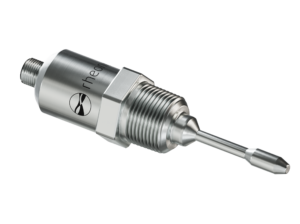
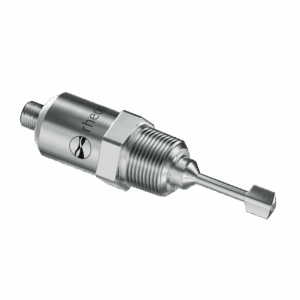
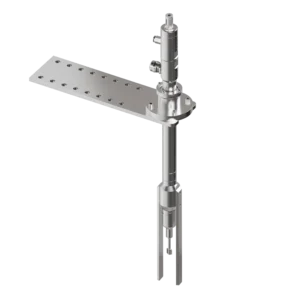
The SRV measures slurry viscosity and temperature inline, and the SRD measures density, viscosity and temperature. Both use a balanced torsional resonator (BTR) and work with either binder system. Rheonics SlurrySense with CleanWave self-cleaning technology is also available to prevent slurry build-up on the sensor. See the Ceramic Slurry Viscosity & Density Control article.
Rheonics SRD
SlurrySense
Why Rheonics?
| What matters | Rheonics SRV/SRD | Typical alternative |
|---|---|---|
| Mounting & vibration | Balanced torsional resonator, insensitive to mounting position and pipe vibration | Many inline/lab instruments are mounting- and vibration-sensitive |
| Properties measured | Density, viscosity and temperature from one probe (SRD); wide-range inline viscosity and temperature (SRV) | Often one property per instrument |
| Maintenance | No moving parts; easy to clean; no routine recalibration | Optics, tubes or sources may need cleaning, recalibration or licensing |
| Hazardous areas | Intrinsic Safety (Ex ia) available | Varies by device |
General product characteristics; confirm exact specifications and certificates for your configuration with Rheonics. Inline measurement supports, and does not replace, validated or compendial QC.
Frequently asked questions
What is the difference between colloidal silica (silica sol) and ethyl silicate binders?
Colloidal silica is a water-based suspension of silica nanoparticles stabilised with a small amount of sodium. It is non-flammable and is the industry standard. Ethyl silicate is alcohol-based: it is hydrolysed to form silica in situ, dries faster, and can be gel-set with ammonia, but it is flammable and produces VOC emissions.
Why has colloidal silica displaced ethyl silicate?
Colloidal silica avoids the solvent handling, VOC emissions, and fire risk of ethyl silicate, while giving strong, consistent shells and simpler shop-floor handling. It is now the dominant shell-room binder.
How does measurement help across binder systems?
Whatever the binder, the binder-to-refractory ratio sets density and viscosity. Inline density tracks the ratio, catching evaporation or an off-ratio batch as it happens, and inline viscosity tracks the resulting flow behaviour, including the slow rise that signals ageing in colloidal silica slurries.
Does inline measurement assess binder chemistry?
No. Binder chemistry and gel behaviour are characterised by laboratory and qualified methods. Inline density and viscosity track the physical slurry condition that the chemistry produces between those lab checks.
Across the Rheonics Knowledge Center
Related content