Introduction
As demand for electric vehicles, consumer electronics, and renewable energy storage grows, battery manufacturers face increasing pressure to improve production efficiency, product consistency, and quality assurance. Electrode slurry preparation is a critical stage in battery manufacturing, yet conventional quality control often relies on offline sampling and laboratory measurements that provide limited visibility into changing process conditions.
This publication explores how inline viscosity and density monitoring can support real-time process control across battery electrode slurry preparation and downstream manufacturing operations.
Key Findings
The publication examines quality control challenges throughout the battery manufacturing process, including raw material verification, slurry formulation and mixing, storage, electrode coating, and cell filling. Conventional sampling-based methods can delay the detection of variations in slurry properties, while predetermined process settings limit operators’ ability to respond to changing conditions.
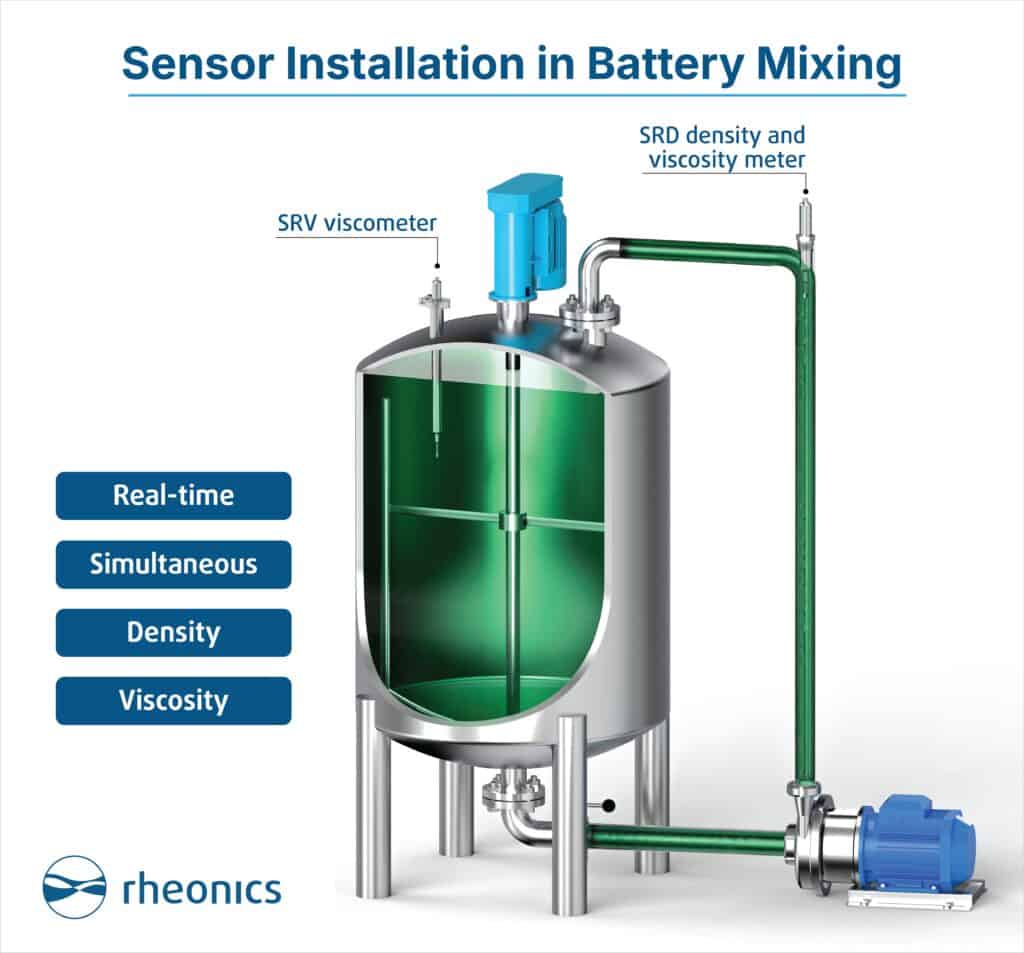
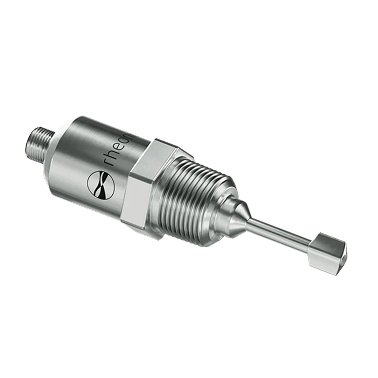
The proposed approach integrates Rheonics inline sensors into key production stages to provide continuous measurements of critical fluid properties. The Rheonics SRV inline viscometer monitors viscosity, while the SRD inline density and viscosity meter provides density and viscosity measurements. These measurements can help manufacturers track slurry homogeneity, maintain process consistency, and identify deviations earlier than periodic laboratory testing alone.
The publication highlights the potential benefits of integrating sensor data with plant quality assurance and process control systems. Continuous monitoring can support more informed process adjustments, improved coating consistency, reduced material waste, and better manufacturing traceability. These outcomes contribute to improved production efficiency and more consistent battery cell performance.
Relevance to Rheonics Technologies
Rheonics SRV and SRD sensors enable inline monitoring of fluid properties in demanding industrial environments. Applied to battery manufacturing, they provide process data that can support quality control during slurry mixing, storage, transport, and electrode coating.
By reducing dependence on discrete offline measurements, these technologies help manufacturers move toward data-driven, closed-loop process control. Real-time viscosity and density measurements can support tighter control of slurry formulation and processing conditions, helping improve manufacturing yield, electrode quality, and production consistency.
The publication demonstrates how Rheonics inline sensing technology can help address the need for scalable, traceable, and reliable quality monitoring across the battery production ecosystem.
Authors: Dr. Daniel Brunner, Dr. Joe Goodbread, Dr. Vijoya Sa, Dr. Sunil Kumar, Cinthya Gaytan
Connect with Rheonics
Follow us on social media to stay updated with the latest innovations, technical insights, and industry news.