
Introduction
Investment casting depends on maintaining consistent slurry properties to produce accurate and durable ceramic shells. This technical article examines the implementation of an automated system for continuously measuring, monitoring, and managing slurry density and viscosity in a production shell room.
The system combines Rheonics SlurrySense technology with Ecolab’s 3D TRASAR real-time data management platform and was deployed at Texas Precision Metalcraft (TPM) to reduce reliance on manual slurry consistency measurements and provide continuous visibility into slurry conditions.
Summary
The article describes a production evaluation of automated slurry monitoring using the Rheonics SRD density and viscosity sensor integrated into the SlurrySense system.
Over a 15-week evaluation period, continuous SlurrySense measurements were compared with conventional efflux cup measurements. The initial comparison established a clear correlation between the two measurement methods and enabled a conversion factor between cup seconds and viscosity in centipoise.
Subsequent parallel measurements demonstrated the value of continuous monitoring. While efflux cup measurements provided intermittent readings, SlurrySense captured ongoing changes in slurry viscosity and density, including changes occurring during periods when manual measurements were not being taken.
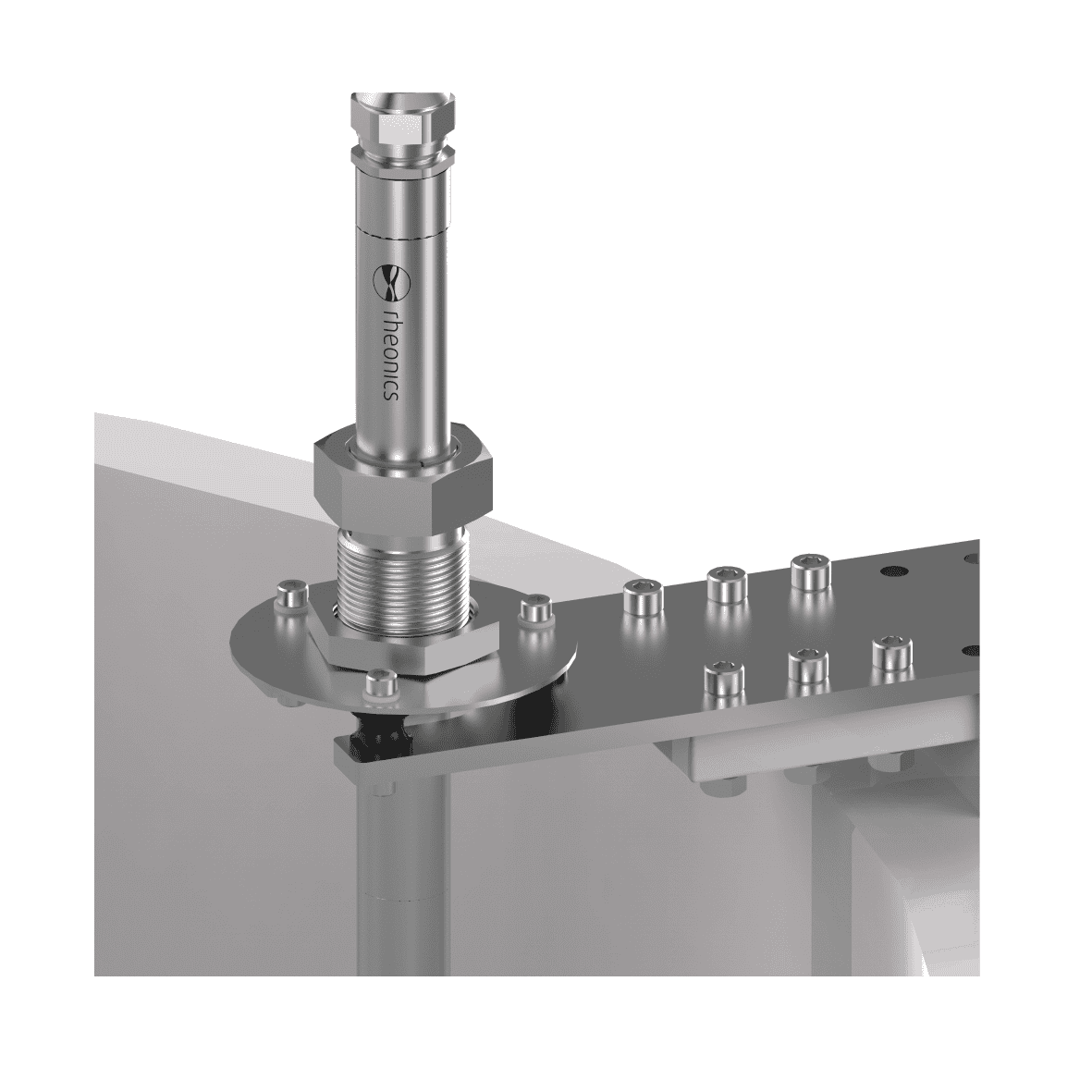
The system also addresses one of the key challenges of measuring investment casting slurries: deposits accumulating on the sensor. The CleanWave self-cleaning system uses low-frequency, high-amplitude vibration to inhibit buildup on the sensing element and maintain stable measurements.
The article presents the automated measurement and data-management approach as a foundation for more consistent slurry monitoring and, ultimately, greater automation of slurry consistency control.
Rheonics Technology and Application
The publication demonstrates the application of several Rheonics technologies in investment casting:
- Rheonics SRD: Provides continuous inline measurement of slurry density, viscosity, and temperature.
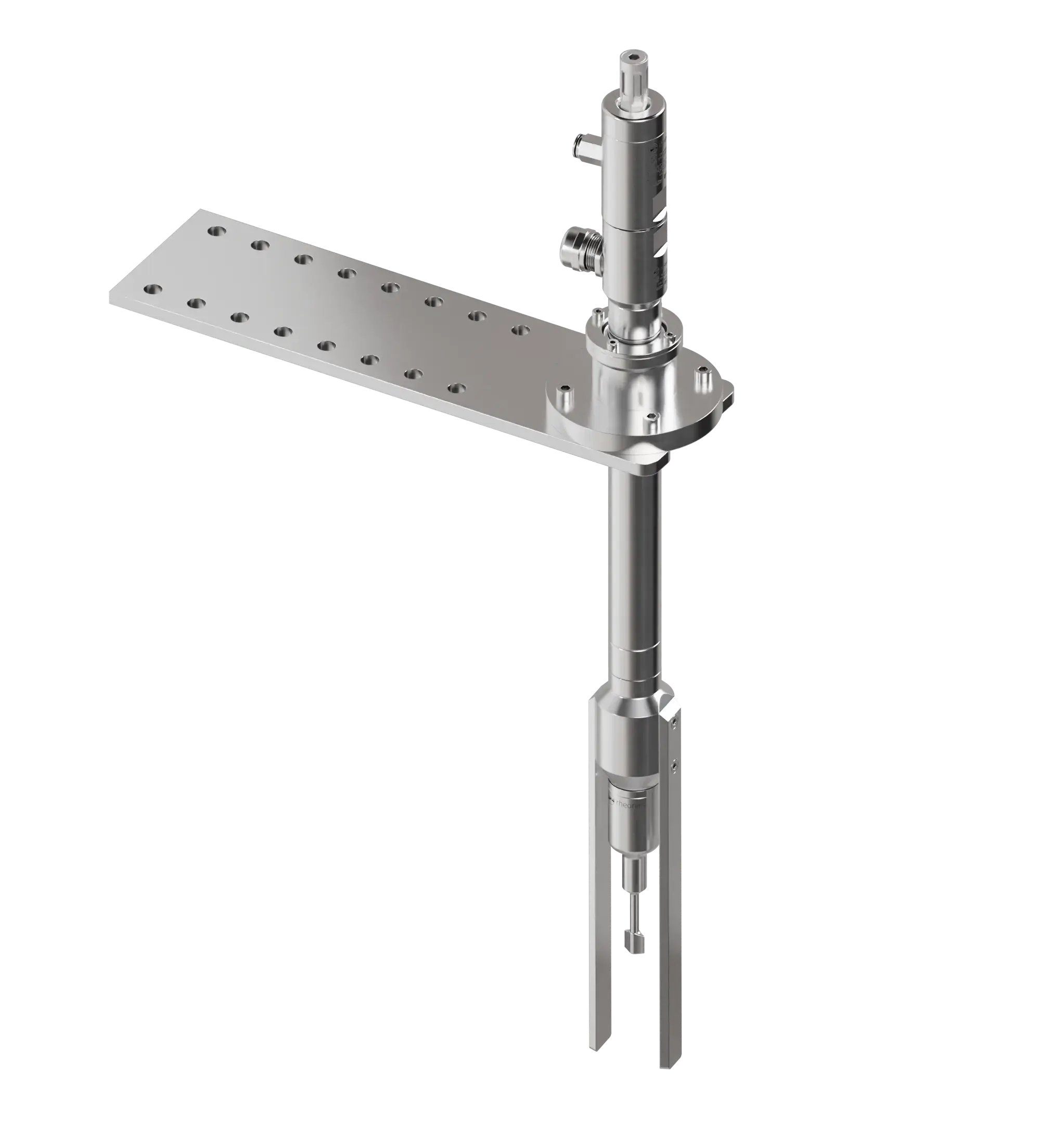
- SlurrySense: Integrates the SRD sensor into a system designed specifically for monitoring investment casting slurry.
- CleanWave: Provides continuous self-cleaning of the sensor probe to address the adherent nature of investment casting slurries.
The SRD measures density and viscosity through the response of its vibrating sensing element. Changes in resonance frequency are related to fluid density, while damping of the resonator is related to viscosity. Integrated temperature measurement supports accurate and reproducible measurements because slurry density and viscosity depend strongly on temperature.
In the evaluated shell-room installation, SlurrySense measurements were integrated with Ecolab’s 3D TRASAR system for data collection, storage, monitoring, and management.
Key Findings
- Continuous SlurrySense measurements showed a clear correlation with conventional efflux cup measurements during the initial comparison period.
- Continuous measurement provided substantially greater measurement resolution than intermittent manual cup measurements.
- SlurrySense captured changes in slurry viscosity that could occur between manual measurements, including changes observed during weekends.
- CleanWave helped maintain stable sensor measurements by reducing deposition on the sensing element.
- The integrated measurement and data-management system provides a foundation for automated slurry consistency monitoring and control.
- Automated monitoring can reduce the need for operators to perform repetitive manual measurements, allowing greater focus on maintaining shell quality.
Connect with Rheonics
Follow us on social media to stay updated with the latest innovations, technical insights, and industry news.