
Overview
Consistent viscosity and density are critical for controlling ceramic slurry during investment casting shell building. Traditional manual and laboratory measurements can be intermittent, time-consuming, and affected by operator variability, while deposits can interfere with in-tank sensors and require frequent cleaning.
This publication presents SlurrySense, a self-cleaning solution developed to enable continuous viscosity and density monitoring in deposit-prone ceramic slurries.
About the Publication
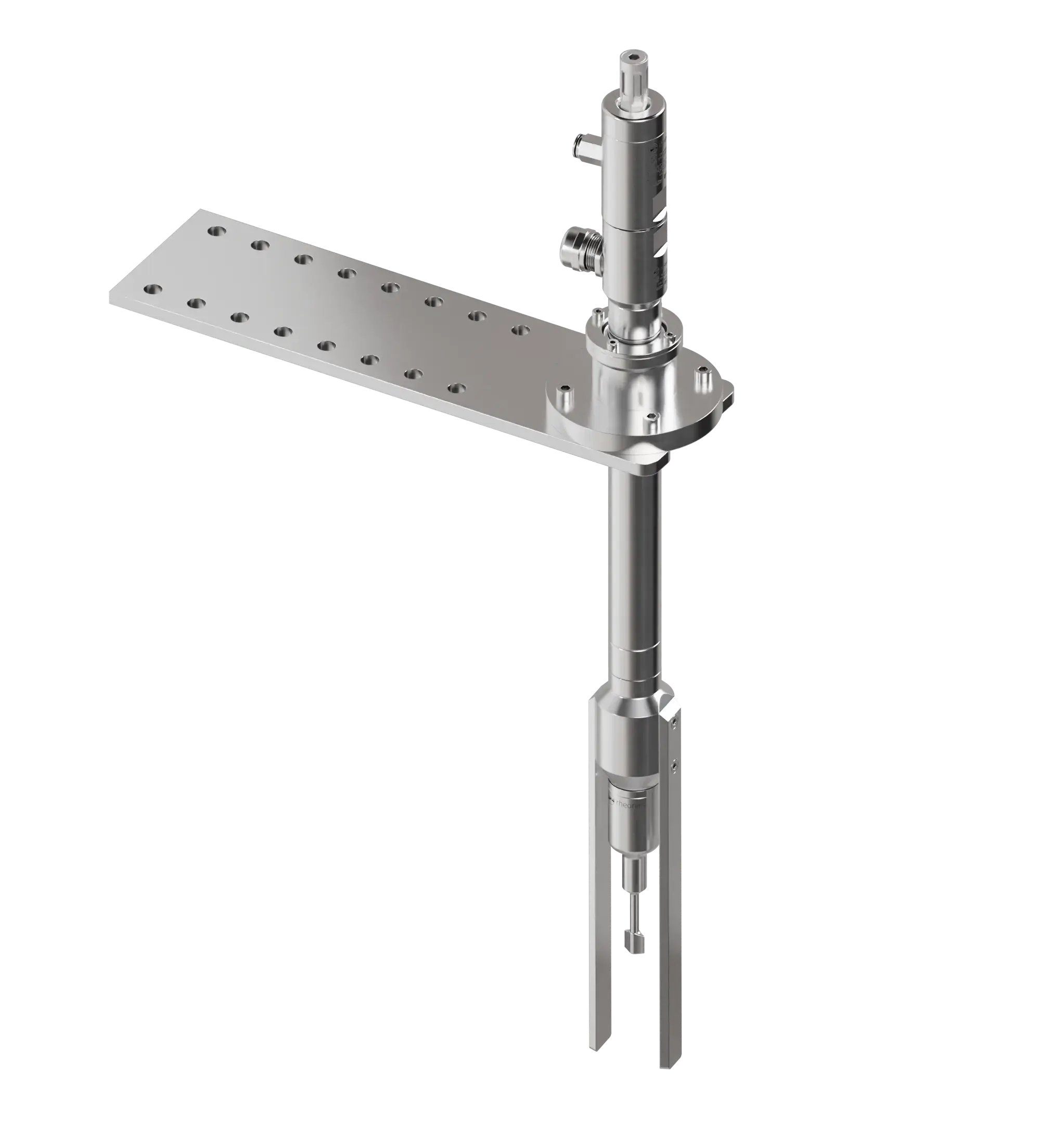
The article describes the development and validation of a self-cleaning sensor based on the Rheonics SRD viscosity and density sensor. The approach uses a built-in, low-frequency, high-amplitude vibration mechanism to help prevent or remove slurry deposits from the sensor.
The system also incorporates an adjustable mounting arrangement that allows the sensor depth in the slurry tank to be modified while maintaining compatibility with investment casting operations.
Key Findings
Testing was conducted in both controlled experiments and operating shell rooms.
- Intermittent vibration testing demonstrated stable and repeatable viscosity and density measurements when the cleaning function was activated.
- Field trials showed that SlurrySense operated continuously without deposits forming on the sensor.
- During approximately one month of operation, no cleaning or inspection was required to maintain measurement accuracy.
- The sensor detected process changes including evaporation and dilution events.
- SRD viscosity trends aligned with measurements obtained using efflux cups.
- The self-cleaning mechanism did not disrupt normal wax-tree dipping operations.

Rheonics Relevance
The publication demonstrates how Rheonics SRD technology can be extended to deposit-prone ceramic slurry applications where continuous measurement would otherwise require frequent sensor cleaning.
By combining the SRD sensor with self-cleaning vibration technology, SlurrySense supports continuous monitoring of viscosity and density while reducing manual measurement and maintenance requirements. This can increase confidence in in-tank measurements and provide data suitable for process monitoring and control.
Connect with Rheonics
Follow us on social media to stay updated with the latest innovations, technical insights, and industry news.