
Enhancing Safety and Process Control in Combustible Dust Environments with EX Certified Rheonics Density Meters and Viscometers
Combustible dust poses a significant explosion risk across industries such as food processing, chemicals, mining,…

Being one of the most versatile building materials, concrete is used in many forms of construction. Concrete is often used in residential driveways, house foundations, walls, as well as many other uses. It is made by mixing cement, water, coarse and fine aggregates. Mixing is the most fundamental step in the manufacture of concrete. Mixing concrete may or may not be a precision operation depending on the application. For applications such as building a containment bunker for accumulating waste, precision is not very important. For critical applications like building a skyscraper, quality control requirements are very high.

There are two main categories of mixer: batch mixers and continuous mixers. Batch mixers produce concrete one batch at a time, while continuous mixers produce concrete at a constant rate. Irrespective of the mixer, rheological properties of the prepared concrete, mainly viscosity, is critical for concrete industry since it affects placement and workability. It influences the productivity and quality of concrete, including mechanical properties and durability. Monitoring of viscosity during the mixing process is needed to detect if the desired mix consistency has been achieved. It can help control the quality of fresh concrete and ensure sustainability of concrete structures.
The broad and significant factors which make viscosity management important in concrete mixing:
To ensure the change in concrete viscosity through-out the process stream is monitored in real time, making measurements from a baseline rather than simply measuring absolute values, and making viscosity adjustments by adjusting solvents and temperature to keep it within specified limits.
Concrete mixing operators recognize the need to monitor viscosity but making that measurement has challenged process engineers and quality departments over the years.
Existing laboratory viscometers are of little value in process environments because viscosity is directly affected by temperature, shear rate and other variables that are very different off-line from what they are in-line. Collecting samples to be tested in the laboratory and making process decisions based on the findings in the laboratory can be highly cumbersome, time-consuming and extremely inefficient. It is pretty inaccurate, inconsistent and non-repeatable even with an experienced operator.
Rotational viscometer measures concrete viscosity by monitoring the torque required to rotate a spindle at a constant speed within the fluid. The viscosity measurement principle is as follows – the torque, generally measured by determining the reaction torque on the motor, is proportional to the viscous drag on the spindle, and thus to the viscosity of the fluid. This technique however poses more problems than it solves:
Automated and continuous in-line viscosity measurement is crucial to concrete mix. Rheonics offers the following solutions for the concrete mixing process:
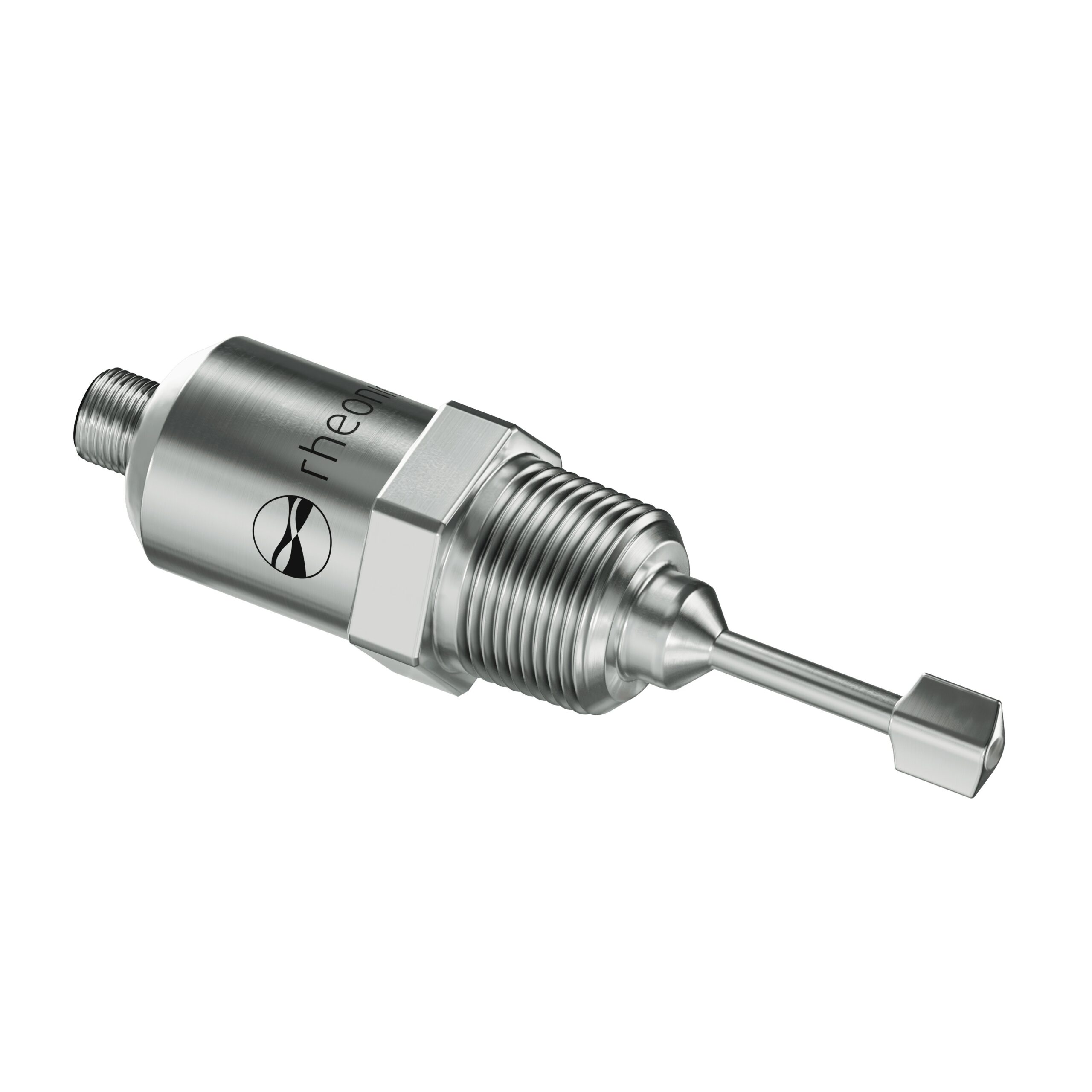
Automated in-line viscosity measurement through SRV or an SRD eliminates the variations in sample taking and lab techniques which are used for viscosity measurement by the traditional methods. Rheonics’ sensors are driven by patented torsional resonators. Rheonics balanced torsional resonators together with proprietary 3rd generation electronics and algorithms make these sensors accurate, reliable and repeatable under the harshest operating conditions. The sensor is located in-line so that it continuously measures the concrete mix viscosity. The consistency of the concrete mix can be ensured by automation of the dosing system through a controller using continuous real-time viscosity measurements. Both the sensors have a compact form factor for simple OEM and retrofit installation. They require no maintenance or re-configurations. Using no consumables, SRV and SRD are extremely easy to operate.
Compact form factor, no moving parts and require no maintenance
Rheonics’ SRV and SRD have a very small form factor for simple OEM and retrofit installation. They enable easy integration in any process stream. They are easy to clean and require no maintenance or re-configurations.
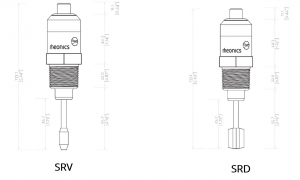
Insensitive to mounting conditions: Any configuration possible
Rheonics SRV and SRD use unique patented co-axial resonator, in which two ends of the sensors twist in opposite directions, cancelling out reaction torques on their mounting and hence making them completely insensitive to mounting conditions. Hook up the sensor in different parts of the mixing tank and check the consistency of the mix throughout the process. These sensors can easily cope up with regular relocation.
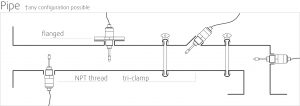
Complete system overview and predictive control – monitor the mixing process with extreme ease
Rheonics’ software is powerful, intuitive and convenient to use. Real-time ink viscosity can be monitored on a computer. Multiple sensors are managed from a single dashboard spread across the factory floor.
Wide operational capabilities
Rheonics’ instruments are built to make measurements in the most challenging conditions. SRV has the widest operational range in the market for inline process viscometer:
Achieve the right mix properties, cut down costs and enhance productivity
Rheonics’ closed loop process systems cater to the needs of today’s environmental and safety concerns. Integrate an SRV/SRD in the mixing tank and monitor the viscosity of the mixture all the way till it achieves the desired viscosity SRV (and SRD) constantly monitors and controls viscosity (and density in case of SRD) and prevents overuse of resources. Optimise the mixing process with an SRV and experience lesser reject rates, lesser wastes, fewer customer complaints, fewer press shut downs and material cost savings– produce exacting results safely and profitably. Avoid future liabilities and litigation costs, achieve a better bottom line.
Superior sensor design and technology
Sophisticated, patented 3rd generation electronics drive these sensors and evaluate their response. Ultra-fast and robust electronics, combined with comprehensive computational models, make Rheonics devices one of the fastest and most accurate in the industry. SRV and SRD give real time, accurate viscosity (and density for SRD) measurements every second and are not affected by flow rate variations!
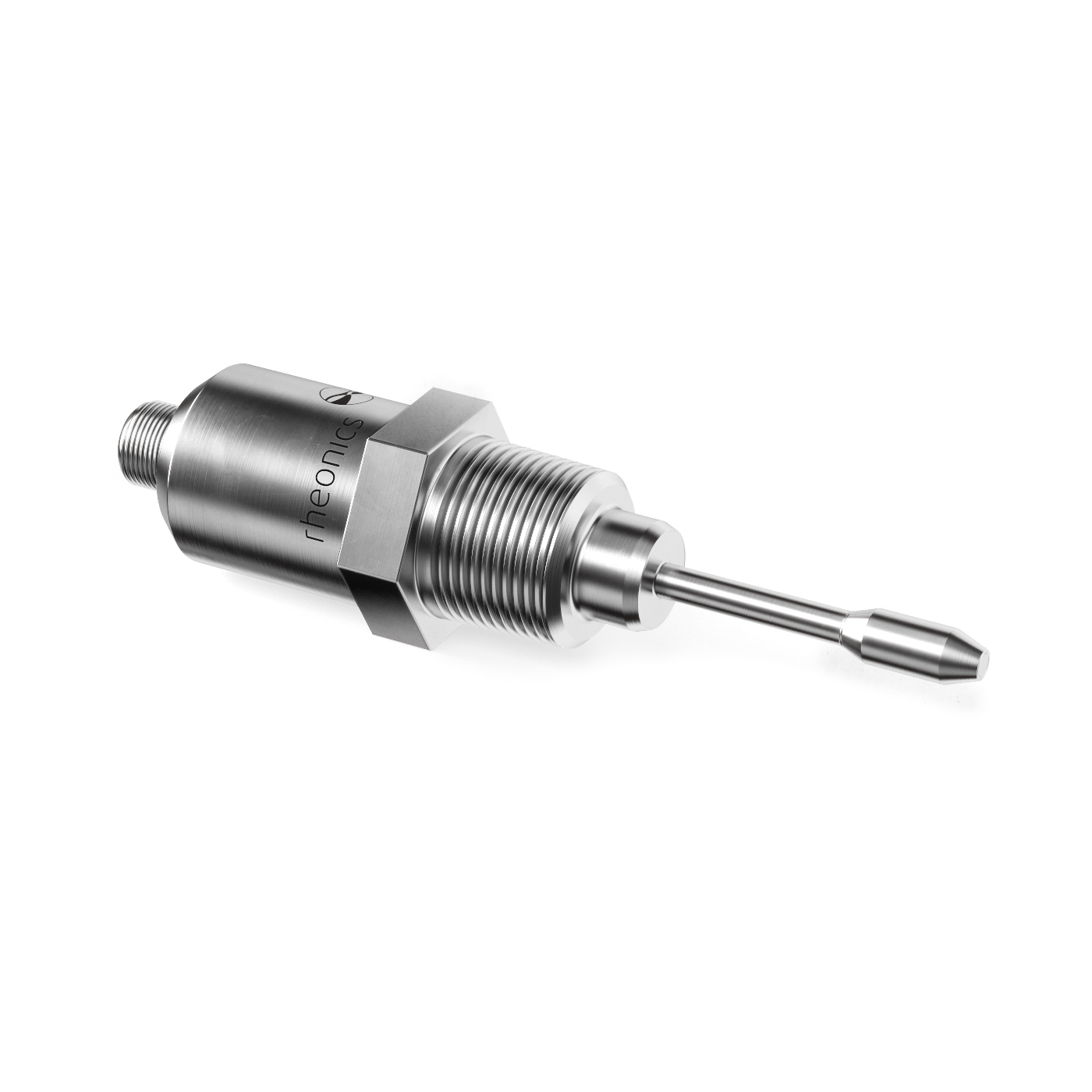
SRV is available with industry standard process connections like ¾” NPT and 1” Tri-clamp allowing operators to replace an existing temperature sensor in their process line with SRV giving highly valuable and actionable process fluid information like viscosity besides an accurate measurement of temperature using an in-build Pt1000 (DIN EN 60751 Class AA, A, B available).
Electronics built to fit your needs
Available in both an explosion-proof transmitter housing and a small-form factor DIN rail mount, the sensor electronics enables easy integration into process pipelines and inside equipment cabinets of machines.
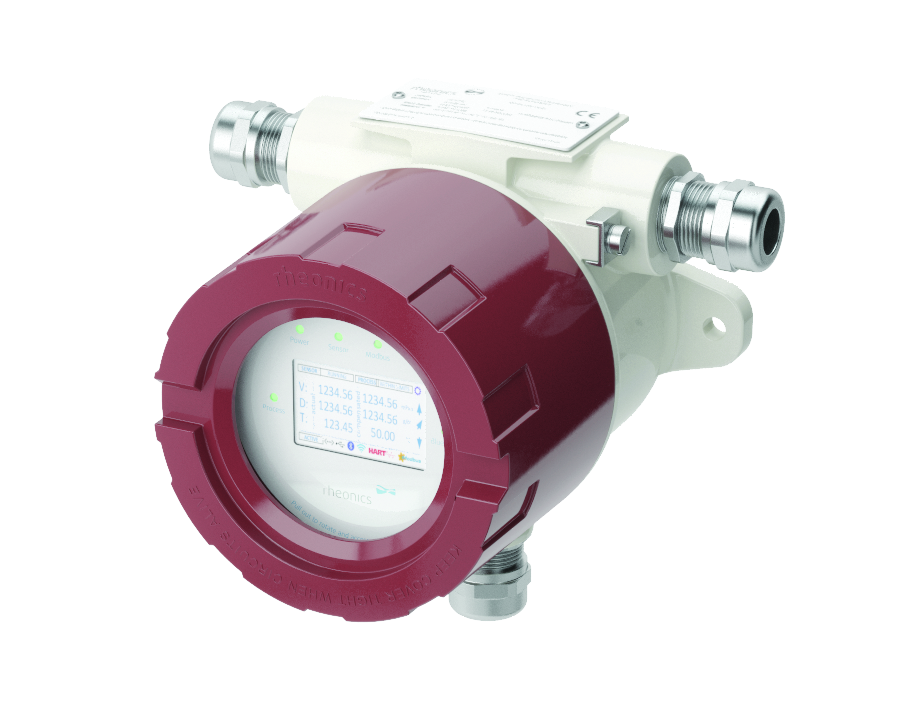
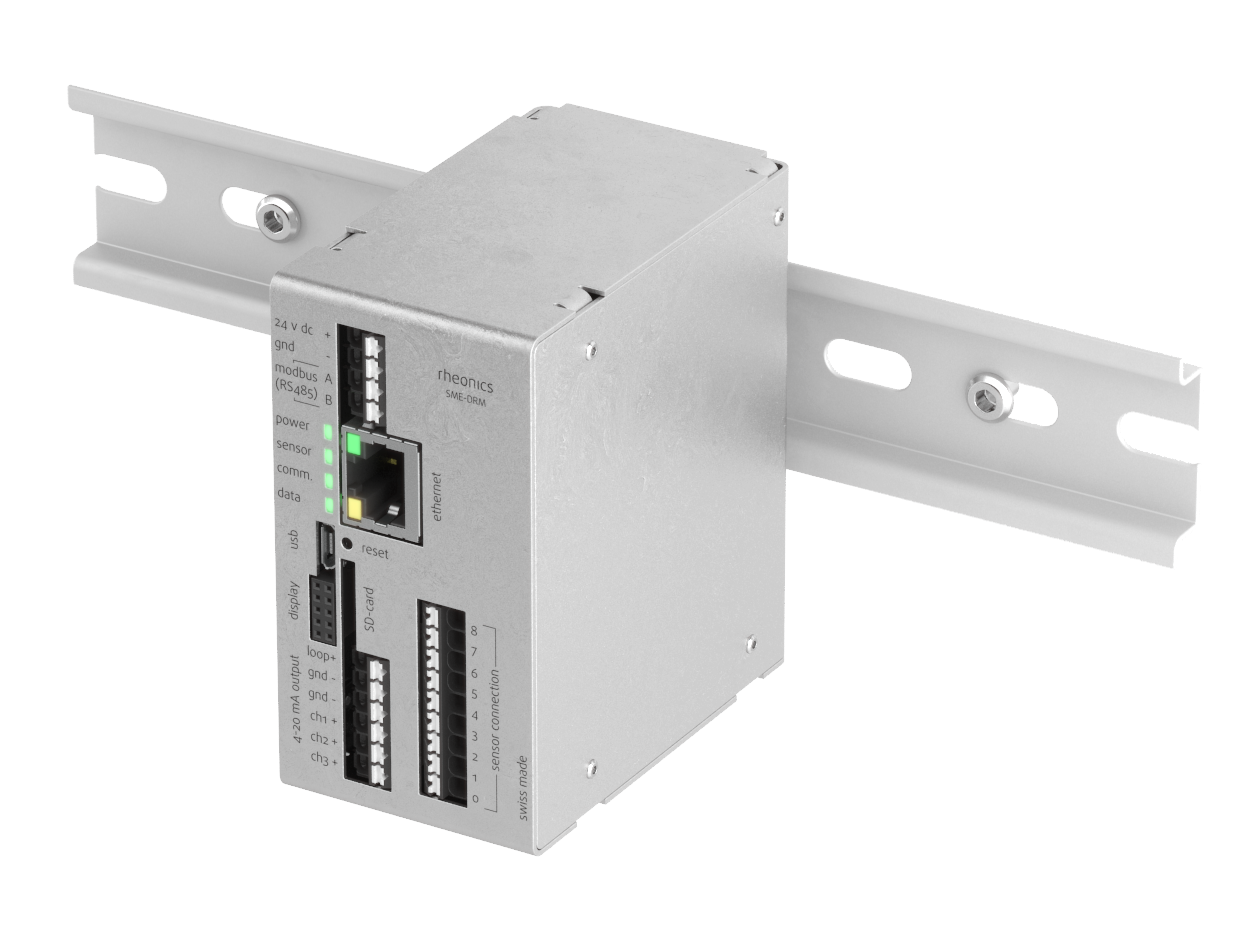
Easy to integrate
Multiple Analog and digital communication methods implemented in the sensor electronics makes connecting to industrial PLC and control systems straightforward and simple.

Directly install the sensor to your process stream to do real time viscosity and density measurements. No bypass line is required: the sensor can be immersed in-line, flow rate and vibrations do not affect the measurement stability and accuracy. Optimize mixing performance by providing repeated, consecutive, and consistent tests on the fluid.
Are you having some problems installing the sensor probe at the top, side, or bottom of the tank? See how to install the sensor probe on the mixing shaft here.
Rheonics designs, manufactures and markets innovative fluid sensing and monitoring systems. Precision built in Switzerland, Rheonics’ in-line viscometers has the sensitivity demanded by the application and the reliability needed to survive in a harsh operating environment. Stable results – even under adverse flow conditions. No effect of pressure drop or flow rate. It is equally well suited to quality control measurements in the laboratory.
Combustible dust poses a significant explosion risk across industries such as food processing, chemicals, mining,…
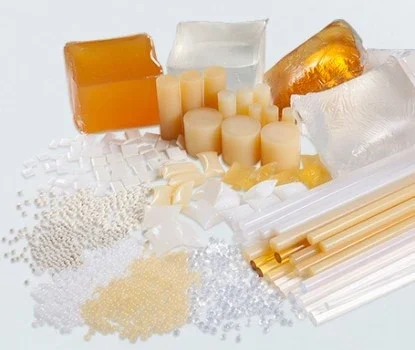
Adhesive hotmelt’s viscosity is a critical property, as it directly impacts its ability to be…
In battery manufacturing, viscosity and density play a critical role in achieving consistent slurry quality,…
The mining industry has always been known for its complexity and hard environments. From ore…
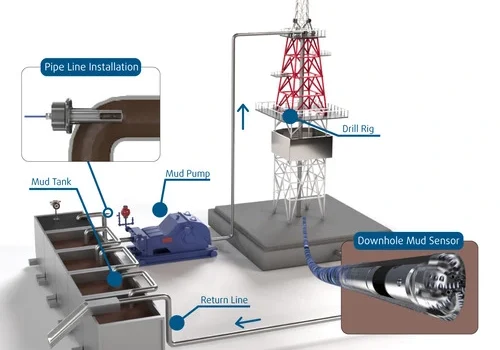
Drilling mud density and viscosity are critical parameters that directly influence drilling performance, borehole stability,…
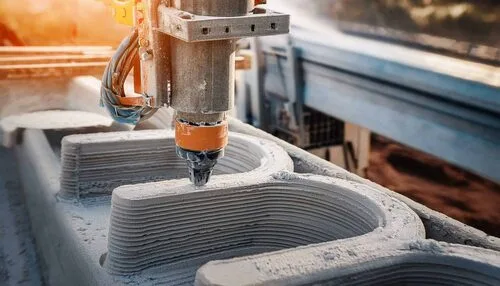
Density and viscosity are critical parameters in 3D cement printing as they directly affect the…