
A Comprehensive Guide to Ex-Certified Inline Process Measurement Instruments for Gas and Dust Hazardous Environments
Table of Contents
1. Process Excellence in Demanding Environments
The accurate and reliable measurement of process variables is fundamental to the safe and efficient operation of modern industrial plants. This report provides a detailed overview and categorized lists of inline process measurement instruments specifically designed and certified for use in hazardous areas, where the presence of combustible dusts or flammable gases and vapors necessitates stringent safety protocols. The primary aim is to furnish engineering professionals with the critical information required for selecting appropriate instrumentation that complies with rigorous safety standards while meeting process measurement needs.
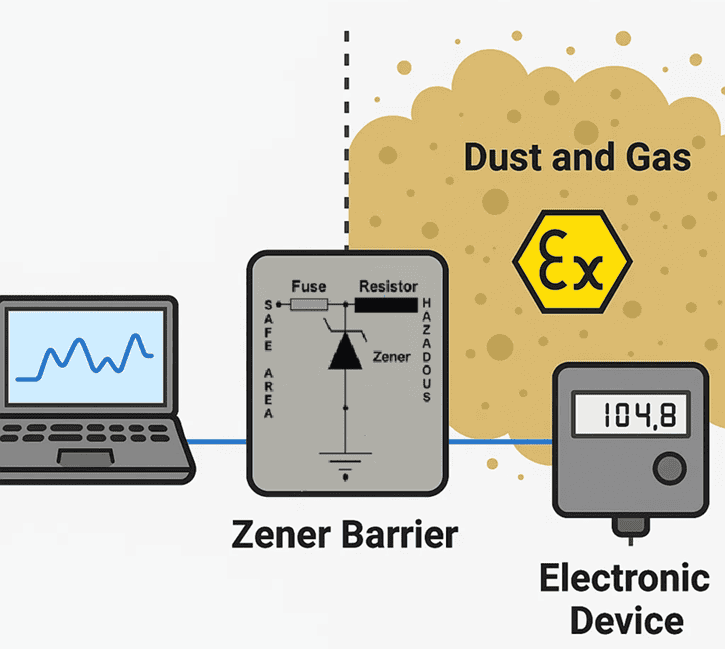
In industries such as chemical processing, oil and gas, pharmaceuticals, food processing, and mining, the potential for flammable gases, vapors, or combustible dusts to form explosive atmospheres is a constant concern. In such environments, any electrical or non-electrical equipment, if not specifically designed, can become an ignition source, potentially leading to catastrophic explosions and significant loss of life and property. Consequently, the use of Ex-certified instrumentation is not just recommended but is a legal and ethical imperative. Explosion protection strategies are broadly categorized into primary and secondary measures. Primary explosion protection aims to prevent the formation of explosive atmospheres altogether, for example, by substituting flammable substances or using inerting systems. Secondary explosion protection, on the other hand, focuses on preventing the ignition of any explosive atmosphere that may form. Ex-certified instruments are a critical component of secondary explosion protection, designed and tested to ensure they do not release sufficient energy (electrical or thermal) to ignite a surrounding hazardous atmosphere.
The landscape of Ex certification is intricate, encompassing a multitude of international and regional standards, various hazardous area zone classifications, and diverse equipment protection types. This complexity underscores the necessity for a high degree of expertise in instrument selection, making comprehensive guides such as this report invaluable for end-users striving to ensure both safety and compliance. This report will focus on several key categories of inline process measurement instruments, including flow meters, level transmitters, pressure transmitters, temperature sensors and transmitters, and analytical instruments (such as gas analyzers, pH sensors, and conductivity sensors), for which Ex certification details have been identified within the available information.
2. Decoding Hazardous Area Classifications: Gas and Dust
Understanding the principles of explosion protection and the associated hazardous area classifications is paramount when selecting and installing equipment in potentially explosive atmospheres. As previously noted, primary explosion protection aims to prevent the formation of such atmospheres, while secondary explosion protection deals with preventing their ignition.2 Ex-certified process instruments are a cornerstone of secondary explosion protection.
2.1. The Nature of Dust Explosions
Hazardous areas are classified into zones based on the likelihood and duration of the presence of an explosive atmosphere. This zoning dictates the required level of protection for equipment installed within these areas.
Table 1: Hazardous area zoning
| Category | Zone | Description |
|---|---|---|
| Gas Hazardous Areas | Zone 0 | Continuous presence of gas (e.g., inside storage tanks with flammable liquids). |
| Zone 1 | Likely presence of gas during normal operation (e.g., around filling pump seals). | |
| Zone 2 | Rare and short gas presence (e.g., adjacent to Zone 1 areas). | |
| Dust Hazardous Areas | Zone 20 | Continuous dust presence (e.g., inside dust collectors or silos). |
| Zone 21 | Likely dust presence during normal operations (e.g., around bagging or mixing equipment) | |
| Zone 22 | Rare and short dust presence (e.g., near dust extraction points) |
2.2. Common Types of Protection
Hazardous areas are classified into zones based on the likelihood and duration of the presence of an explosive atmosphere. This zoning dictates the required level of protection for equipment installed within these areas.
2.3. Gas and Dust Groups
● Gas Groups (e.g., IIC, IIB, IIA): Flammable gases and vapors are categorized into groups based on their ignition characteristics. Group IIC represents the most easily ignitable gases (e.g., hydrogen, acetylene), followed by Group IIB (e.g., ethylene), and Group IIA (e.g., propane). Equipment marked ‘IIC‘ is also suitable for applications requiring Group IIA or IIB protection.
● Dust Groups (e.g., IIIC, IIIB, IIIA): Combustible dusts are grouped based on their nature and conductivity. Group IIIC is for conductive dusts (e.g., metal dusts), Group IIIB for non-conductive dusts (e.g., grain dust, coal dust), and Group IIIA for combustible flyings. Equipment marked ‘IIIC‘ is suitable for Group IIIA and IIIB applications.
2.4. Temperature Class (T-Rating)
The temperature class (T1 to T6) of Ex-certified equipment indicates the maximum surface temperature the equipment will reach during operation. This maximum surface temperature must always be lower than the ignition temperature of the specific flammable gas, vapor, or dust present in the hazardous area. T6 represents the lowest maximum surface temperature (85°C), making it suitable for substances with low auto-ignition temperatures, while T1 represents the highest (450°C).
2.5. International and Regional Standards
Several certification schemes and standards govern Ex equipment globally.
● ATEX: The ATEX Directive (currently 2014/34/EU) is mandatory for equipment sold within the European Union.
● IECEx: The IECEx System is an international certification scheme that aims to facilitate international trade in equipment for use in explosive atmospheres by providing a globally recognized mark of conformity. Many countries accept IECEx certification, sometimes as a basis for national certification.
● Other significant regional certifications include FM (Factory Mutual) Approvals and CSA (Canadian Standards Association) Group for North America, and NEPSI (National Supervision and Inspection Centre for Explosion Protection and Safety of Instrumentation) for China.
The existence of multiple certification schemes, while often harmonized to a degree, can introduce complexity, particularly for projects with a global footprint. While the IECEx scheme provides a valuable international baseline, it’s crucial to recognize that local adoption or supplementary requirements might still apply in specific jurisdictions. Therefore, verifying which certifications are accepted or mandated in the country of installation remains a critical step for engineering professionals, even if an instrument carries an IECEx certificate.
3. Ex-Dust Certified Inline Process Measurement Instruments
Combustible dusts, generated from a wide variety of materials including grains, sugar, flour, wood, plastics, metals, and certain chemicals, can form explosive atmospheres when suspended in air in sufficient concentrations and ignited.
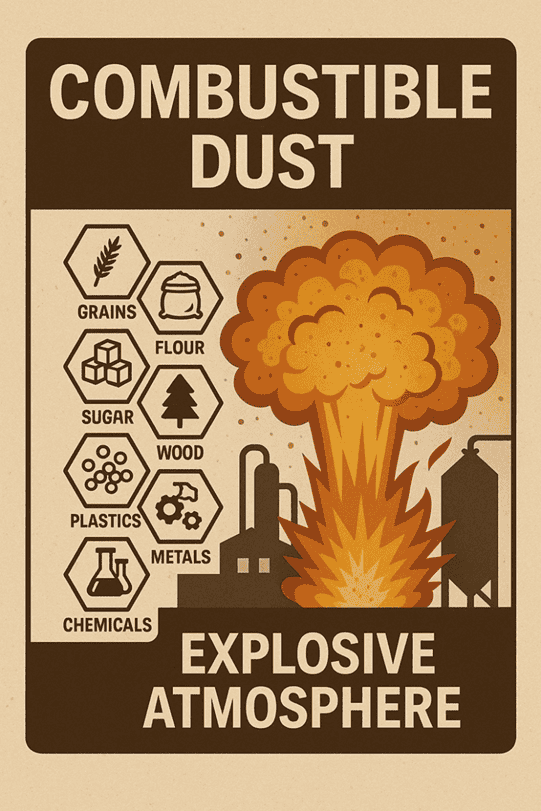
Consequently, industries handling such materials must employ equipment specifically certified for these environments. The primary protection methods for instruments in dusty hazardous areas are “Protection by Enclosure” (Ex t – further subdivided into Ex ta, Ex tb, and Ex tc corresponding to Zones 20, 21, and 22 respectively) and “Intrinsic Safety” (Ex i – Ex ia, Ex ib, Ex ic). Protection by enclosure prevents dust from entering the instrument in amounts that could cause ignition and limits the instrument’s surface temperature. Intrinsic safety limits the electrical energy to prevent ignition of a dust cloud or layer.
The following table details selected inline process measurement instruments with Ex dust certifications, based on the available information. It is important to note that many instruments possess both gas and dust certifications; this section highlights their dust certification, and they will be revisited in Section 5 if they also feature gas certifications relevant to the same applications.
Table 2: Ex-Dust Certified Inline Process Measurement Instruments
| Manufacturer | Specific Ex Dust Classification (ATEX/IECEx or equivalent) | Typical Applications in Dust Environments | Instrument Type / Model Series |
|---|---|---|---|
| AMETEK Land | Zone 21: Ex tb IIIC T85C Db; Zone 22: Ex tc IIIC T85…160 C Dc (ATEX/IECEx/UKEX) | Thermal imaging, hot spot detection on conveyors, temperature monitoring in areas with combustible dust. | EX SPOT Pyrometer (with EXSH1 housing) |
| Endress+Hauser | ATEX/IECEx approved for dust hazardous areas (e.g., Zone 20/21/22, specific marking from certificate). General EPL Da/Db/Dc coverage. | Liquid analysis (pH, ORP, conductivity, oxygen) in chemical, pharmaceutical, food & beverage industries where dust may be present. | Liquiline CM42B Transmitter (with Memosens sensors) |
| ABB | FM Approvals (DIP): Class II, Div 1, Groups E,F,G; Class III, Div 1; T5 | Differential pressure for flow, level, filter monitoring in industries such as chemical, power, food/beverage, mining involving powders or dusts. | 266DSH Differential Pressure Transmitter |
| Emerson | ATEX: II 1D Ex ta IIIC T20069/79°C Da; II 1D Ex ia IIIC T20069/79°C Da; II 1D Ex ia/ib IIIC T20069°C Da/Db. IECEx: Similar markings. | Level and interface measurement in liquids and solids, including dusty environments; overfill prevention. | Rosemount 5300 Level Transmitter (Guided Wave Radar) |
| KROHNE | IECEx: Ex ia IIIC T85°C...T°C Da/Db; Ex ia tb IIIC T85°C...T°C Da/Db; Ex ic IIIC T85°C...T°C Dc. (T varies) | Level measurement of liquids/solids, including powders, in narrow tanks, long nozzles, dusty conditions in chemical, oil & gas. | Optiswirl 4200 Vortex Flow Meter |
| Rheonics | ATEX: II 1 D Ex ia IIIC T135°C Da; IECEx: Ex ia IIIC T135°C Da (Zone 20/21) | Inline density and viscosity measurement in chemical, food & beverage, pharmaceutical, mining, oil & gas industries where combustible dust may be present. 72 | SRD |
| Rheonics | ATEX: II 1 D Ex ia IIIC T135°C Da; IECEx: Ex ia IIIC T135°C Da (Zone 20/21) | Inline viscosity measurement in chemical, food & beverage, pharmaceutical, mining, oil & gas, printing, coatings industries where combustible dust may be present. 73 | SRV |
| Schneider Electric (Foxboro) | ATEX: II 1/2 D Ex ia IIIC T85°C...T°C Da/Db; II 1/2 D Ex ia tb IIIC T85°C...T°C Da/Db; II 3 D Ex ic IIIC T85°C...T*°C Dc. IECEx: Similar. | Level measurement of dry bulk solids, fine powders in very dusty atmospheres; high/narrow silos. Mining, chemical, power, agri-food. | LR65 Radar Level Transmitter |
| Siemens | IECEx: Ex ta/ib IIIC T200 Tx °C / T50 Ty °C Da/Db; Ex ta/tb IIIC T200 Tx °C / T50 Ty °C Da/Db | Temperature measurement in processes involving combustible dusts. | SITRANS TS Series Temperature Sensors (TSInsert, TS100, TS200, TS500) |
| Yokogawa | ATEX KF22: Ex tb IIIC T85°C Db | Gauge pressure measurement in process industries where combustible dust is present. | Rotamass TI Coriolis Flow Meter (various models) |
4. Ex-Gas Certified Inline Process Measurement Instruments
Flammable gases or vapors, when mixed with air (or another oxidant) within their flammable limits, can form an explosive atmosphere. If an ignition source with sufficient energy is present, a rapid combustion or explosion can occur. Industries handling such substances must therefore use equipment specifically certified to prevent ignition in these gas hazardous areas. Common protection methods employed for gas-certified instruments include flameproof enclosures (Ex d), intrinsic safety (Ex ia, Ex ib, Ex ic), increased safety (Ex e), encapsulation (Ex m), and pressurization (Ex p).9
The following table provides details on selected inline process measurement instruments with Ex gas certifications.
Table 3: Ex Gas Certified Inline Process Measurement Instruments
| Manufacturer | Specific Ex Gas Classification (ATEX/IECEx or equivalent) | Typical Application(s) where both certifications are relevant | Instrument Type / Model Series |
|---|---|---|---|
| AMETEK Land | Zone 1: Ex db [op is Ga] IIC T6 Gb; Zone 2: Ex db [op is Ga] IIC T6…T3 Gc (ATEX/IECEx/UKEX) | Thermal imaging, hot spot detection, temperature monitoring in areas with flammable gases. | EX SPOT Pyrometer (with EXSH1 housing) |
| Endress+Hauser | ATEX, IECEx, C/US IS Cl. I Div 1 approved (e.g., Ex ia IIC T4/T6 Ga) | Liquid analysis (pH, ORP, conductivity, oxygen) in chemical, pharmaceutical, oil & gas industries. | Liquiline CM42B Transmitter (with Memosens sensors) |
| ABB | FM (XP): Cl I Div 1 Gr A,B,C,D T5; FM (Flameproof): Cl I Zone 1 AEx d IIC T4 Gb / Ex d IIC T4 Gb; FM (IS): Cl I Zone 0 AEx ia IIC T6-T4 / Ex ia IIC T6-T4. | Differential pressure for flow, level, interface in oil & gas, chemical, power generation. | 266DSH Differential Pressure Transmitter |
| Panametrics | US/CAN: Cl I Div 1 Gr B,C,D; Cl I Zone 1 Ex d IIC T6. ATEX/IECEx: Ex d IIC T6 FISCO outputs. | Liquid flow in petrochemical, chemical processing, LNG, crude oil. | PanaFlow XMT1000 Ultrasonic Flow Transmitter (Liquids) |
| Emerson (Rosemount) | ATEX: II 1/2G Ex db ia IIC T4 Ga/Gb; II 1G Ex ia IIC T4 Ga. IECEx: Similar markings. | Level and interface measurement in liquids/solids in tanks with flammable vapors. | Rosemount 5300 Level Transmitter (Guided Wave Radar) |
| Emerson (Micro Motion) | ATEX: II 3G Ex nA IIC T1–T5 Gc (with 2400S/FMT Tx); II 2G Ex ib IIC T1–T5 Gb (H025-H200 with Core Proc./1700/2700 Tx); II 2G Ex ib IIB T1–T5 Gb (H300). IECEx: Similar. | Hygienic flow/density measurement in food, pharma; also general gas applications depending on model. | Micro Motion H-Series Coriolis Flow Meter |
| KROHNE | Certified for hazardous areas (specific gas marking from certificate). | Viscosity measurement of petrochemicals, lubricants, detergents where flammable vapors may be present. | L-Vis 520 Ex Inline Viscometer |
| Rheonics | ATEX: II 1 G Ex ia IIC T6...T1 Ga; IECEx: Ex ia IIC T6...T1 Ga (Zone 0/1) | Inline density and viscosity measurement in chemical, oil & gas, petrochemical, pharmaceutical industries with flammable gases/vapors. 72 | SRD |
| Rheonics | ATEX: II 1 G Ex ia IIC T6...T1 Ga; IECEx: Ex ia IIC T6...T1 Ga (Zone 0/1) | Inline viscosity measurement in chemical, oil & gas, petrochemical, pharmaceutical, printing, coatings industries with flammable gases/vapors. 73 | SRV |
| Siemens | IECEx: Ex ia IIC T6...T1 Ga; Ex ic IIC T6...T1 Gc; Ex ia/ib IIC T6...T1 Ga/Gb; Ex ec IIC T6...T1 Gc; Ex db IIC T6...T1 Ga/Gb | Temperature measurement in various process industries with flammable gas atmospheres. | SITRANS TS Series Temperature Sensors |
| Yokogawa | ATEX: II 2 G Ex db pxb IIB + H2 T4 Gb; IECEx: Ex db pxb IIB + H2 T4 Gb | CEMS, process combustion control (NO, SO2, CO, CO2, CH4, O2) in petroleum, chemical, steel industries. | IR810S Infrared Gas Analyzer |
5. Dual (Gas and Dust) Ex Certified Instruments for Versatile Applications
A key area of interest for many industrial facilities is the availability of process instruments that carry certifications for both gas and dust hazardous environments and are suitable for performing the same core measurement function in applications where either or both hazards may be present. Such dual certification offers enhanced versatility, potentially simplifying equipment standardization, reducing spare parts inventory, and providing robust solutions for complex environments.
The rationale behind manufacturers seeking dual certifications is multifaceted. It allows a single instrument model to be marketed for a wider range of hazardous area types, thereby increasing its applicability. Furthermore, some industrial processes inherently involve hybrid environments where both flammable gases or vapors and combustible dusts can coexist. Examples include certain chemical manufacturing processes, pharmaceutical production involving powdered APIs and flammable solvents, food processing facilities handling grains or sugars that can off-gas or use flammable cleaning agents, and mining operations with methane gas and coal dust. For manufacturers, achieving dual certification for a robustly designed instrument can be a cost-effective strategy to broaden market reach.
The following table highlights inline process measurement instruments that, based on the available data, appear to possess both Ex gas and Ex dust certifications and are used for similar typical applications where such dual hazards might be encountered or where versatility is a key selection criterion.
Table 4: Dual Gas & Dust Ex Certified Inline Instruments for Specific Applications
| Manufacturer | Specific Ex Gas Classification (ATEX/IECEx or equivalent) | Specific Ex Dust Classification (ATEX/IECEx or equivalent) | Typical Application(s) where both certifications are relevant | Instrument Type / Model Series |
|---|---|---|---|---|
| AMETEK Land | Zone 1: Ex db [op is Ga] IIC T6 Gb; Zone 2: Ex db [op is Ga] IIC T6…T3 Gc | Zone 21: Ex tb IIIC T85C Db; Zone 22: Ex tc IIIC T85…160 C Dc | Non-contact temperature monitoring of processes/materials (e.g., on conveyors, in furnaces) in areas with potential gas and dust hazards (e.g., biomass processing, some chemical plants). | EX SPOT Pyrometer (with EXSH1 housing) |
| Endress+Hauser | Ex ia IIC T4/T6 Ga (typical) | EPL Da/Db/Dc coverage (specific marking from certificate) | Liquid analysis (pH, conductivity, etc.) in chemical, pharmaceutical, food processing plants where both flammable vapors and combustible dusts (e.g., from ingredients) may be present. | Liquiline CM42B Transmitter |
| ABB | FM: Cl I Div 1 Gr A,B,C,D T5 (XP); Cl I Zn 0 AEx ia IIC T6-T4 (IS) | FM: Cl II/III Div 1 Gr E,F,G T5 (DIP) | Pressure, flow, or level measurement in diverse industries like chemicals, mining, or food processing where both gas and dust hazards can be encountered. | 266DSH Differential Pressure Transmitter |
| Emerson | ATEX/IECEx: Ex db ia IIC T4 Ga/Gb; Ex ia IIC T4 Ga | ATEX/IECEx: Ex ta IIIC T20069/79°C Da; Ex ia IIIC T20069/79°C Da | Level measurement in tanks containing liquids or solids that might present both vapor (gas) and particulate (dust) hazards, common in chemical processing or bulk solids handling. | Rosemount 5300 Level Transmitter |
| KROHNE | IECEx: Ex ia IIC T6-T* Ga/Gb; Ex db ia IIC T6-T* Ga/Gb | IECEx: Ex ia IIIC T85-T°C Da/Db; Ex ia tb IIIC T85-T°C Da/Db | Level measurement in chemical plants or oil & gas storage where tanks might contain volatile liquids that also have sediment or require handling of powdered additives. | Optiwave 7500 Radar Level Transmitter |
| Rheonics | ATEX: II 1 G Ex ia IIC T6...T1 Ga; IECEx: Ex ia IIC T6...T1 Ga (Zone 0/1) | ATEX: II 1 D Ex ia IIIC T135°C Da; IECEx: Ex ia IIIC T135°C Da (Zone 20/21) | Inline density and viscosity measurement in industries like chemical processing, pharmaceuticals, food & beverage, mining, oil & gas where both flammable gas/vapor and combustible dust hazards can be present. 72 | SRD |
| Rheonics | ATEX: II 1 G Ex ia IIC T6...T1 Ga; IECEx: Ex ia IIC T6...T1 Ga (Zone 0/1) | ATEX: II 1 D Ex ia IIIC T135°C Da; IECEx: Ex ia IIIC T135°C Da (Zone 20/21) | Inline viscosity measurement in industries like chemical processing, pharmaceuticals, food & beverage, mining, oil & gas, printing, coatings where both flammable gas/vapor and combustible dust hazards can be present. 73 | SRV |
6. Critical Considerations for Instrument Selection in Hazardous Areas
Selecting appropriate inline process measurement instruments for hazardous areas is a multifaceted task that extends beyond simply matching a product to a process variable. It demands a rigorous approach to safety and compliance.
Matching Certification to Specific Site Conditions: The foundational step is a comprehensive Hazardous Area Classification (HAC) study for the specific plant location where the instrument will be installed. This study identifies the type of hazardous substance (gas/vapor or dust), the likelihood of its presence (Zone or Division), the specific gas or dust group, and the auto-ignition temperature of the substance. The selected instrument’s Ex certification, including its EPL, Zone/Division rating, Gas/Dust Group suitability (e.g., IIC, IIIC), and Temperature Class (T-rating), must be appropriate for the classified area. For example, installing a Zone 2 certified instrument in a Zone 1 area is a severe safety violation. Process and ambient temperature limits specified on the instrument’s certificate must also be strictly adhered to, as exceeding these can compromise the protection method or lead to surface temperatures exceeding the T-class.
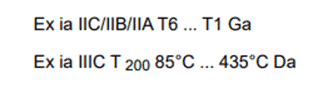
Understanding “Specific Conditions of Use (X/U)”: As emphasized previously, the “Specific Conditions of Use” (often marked with an ‘X’ or ‘U’ on the certificate or nameplate) are integral to the certification and are mandatory for safe installation and operation.12 These conditions can include requirements for specific types of cable entries, grounding and bonding procedures, precautions against electrostatic discharge (especially for non-metallic parts or in dusty areas), limitations on equipment repair (e.g., flameproof joints), or even specific installation orientations.12 Failure to comply with these conditions invalidates the Ex certification and can render the installation unsafe.

Manufacturer’s Documentation and Support: It is imperative to always consult the instrument manufacturer’s official documentation, including installation, operation, and maintenance manuals. If any doubt or ambiguity exists regarding the interpretation of certifications or installation requirements, the manufacturer or their authorized representative should be consulted directly.
Material Compatibility: The materials of construction for wetted parts (those in direct contact with the process medium) must be compatible with the process fluids to prevent corrosion, erosion, or chemical attack that could compromise the instrument’s integrity or measurement accuracy. Similarly, the housing material must be suitable for the ambient environment, resisting corrosion from atmospheric conditions or chemical exposure. It is also important to note that aluminum enclosures may be subject to impact or friction restrictions in certain hazardous area classifications to prevent ignition by sparks.
Ingress Protection (IP Rating): The IP rating of an instrument (e.g., IP66, IP67, IP68) indicates its degree of protection against the ingress of solid particles (including dust) and liquids. An appropriate IP rating is essential to protect the internal components of the instrument and maintain the integrity of its Ex protection method, especially in dusty or wet environments.
Maintenance and Inspection: Regular inspection and maintenance, performed according to the manufacturer’s guidelines and relevant standards, are crucial for ensuring the continued integrity of the Ex protection features throughout the instrument’s service life. Intrinsically safe (Ex i) systems, due to their low energy levels, may offer advantages in terms of maintenance, potentially allowing for live work under specific, controlled conditions without requiring a hot work permit.
The ultimate responsibility for the correct selection, installation, operation, and maintenance of Ex-certified instrumentation rests with the end-user or operator of the facility. While manufacturers provide certified equipment and detailed documentation, it is incumbent upon the user to ensure that the instrument is appropriate for the specific application and that all installation and operational requirements stipulated by the certification and relevant standards are met. This underscores the critical need for competent personnel, adequately trained in hazardous area principles and practices. Relying solely on the Ex marking on a nameplate without a thorough understanding of its implications and associated conditions is insufficient and potentially dangerous.
7. Concluding Remarks and Expert Recommendations
This report has provided a detailed examination of inline process measurement instruments certified for use in hazardous environments characterized by the presence of combustible dusts and/or flammable gases and vapors. A diverse range of instruments, including flow meters, level transmitters, pressure transmitters, temperature sensors, and analytical instruments, are available from leading manufacturers with appropriate Ex certifications. The analysis confirms that common measurement principles are well-represented within these certified product lines. A significant finding is the increasing prevalence of instruments holding dual certifications for both gas and dust hazards, offering enhanced versatility for applications in complex industrial settings or for standardization purposes.
Based on the comprehensive review of the provided information, the following key recommendations are emphasized for engineering professionals involved in the selection and deployment of such instrumentation:
-
Prioritize Comprehensive Hazardous Area Classification (HAC): A site-specific HAC study is the indispensable first step. Without a clear understanding of the Zones, EPLs, Gas/Dust Groups, and Temperature Classes applicable to the installation area, safe instrument selection is impossible.
-
Meticulously Match Instrument Certification to Site Requirements: The chosen instrument’s Ex certification markings must align precisely with the requirements identified in the HAC study. Any discrepancy can lead to an unsafe installation.
-
Obtain and Adhere to “Specific Conditions of Use (X/U)”: These conditions, detailed in the instrument’s certificate and safety manuals, are mandatory. They often contain critical instructions regarding installation, grounding, electrostatic precautions, and maintenance that are essential for preserving the integrity of the Ex protection.
-
Consult Manufacturer Documentation and Support: Always refer to the latest and complete set of manufacturer’s documentation, particularly the Ex-specific safety instructions (e.g., XA documents). When in doubt, seek clarification directly from the manufacturer or their authorized representatives.
-
Address Hybrid Gas/Dust Environments with Extreme Caution: For environments where flammable gases and combustible dusts may be present simultaneously (hybrid mixtures), the suitability of an instrument with separate gas and dust certifications is not automatically guaranteed. Expert assessment, potentially involving the manufacturer or a notified body, is crucial as the ignition characteristics of hybrid mixtures can be more severe.
-
Ensure Personnel Competency: All personnel involved in the specification, installation, operation, and maintenance of Ex-certified equipment must possess adequate training and competency in hazardous area principles, protection methods, and relevant standards.
While international standards like IECEx promote global harmonization of Ex certification, it is important to remain aware that regional or national deviations, interpretations, and specific installation codes (such as the NEC in the USA or CEC in Canada) may still apply. Consequently, a “globally certified” product might still require additional local verification or adherence to specific national regulatory requirements. Engineering teams must ensure compliance with all applicable local laws and standards in the country of installation.
8. Reference
1. rheonics SRD » Density Meter inline online specific gravity …, accessed June 2, 2025, rheonics SRD » Density Meter inline online specific gravity concentration
2. Certificates » rheonics :: viscometer and density meter, accessed June 2, 2025, Certificates » rheonics :: viscometer and density meter
3. Rheonics is now member of Investment Casting Institute, accessed June 2, 2025, Rheonics is now member of Investment Casting Institute » rheonics :: viscometer and density meter
4. rheonics :: density meter & viscometer | inline fluid viscosity & density , accessed June 2, 2025, https://cdn.rheonics.com/wp-content/uploads/2024/10/Rheonics_ATEX_Certificate_SR_DV_BT_EU_TUV_Issue04.pdf
5. Rheonics SRV » inline online Viscometer for fluid viscosity monitoring, accessed June 2, 2025, Rheonics SRV » inline online Viscometer for fluid viscosity monitoring
6. Japan Ex Certificate » rheonics :: viscometer and density meter, accessed June 2, 2025, Japan Ex Certificate » rheonics :: viscometer and density meter
9. Disclaimer
Disclaimer
Rheonics only supervises and takes responsibility for the certification, safety compliance, and operational performance of its own products. Certification details, hazardous area classifications, and operational suitability of products from other manufacturers must be verified directly with the respective manufacturers. Rheonics does not guarantee or endorse the accuracy, completeness, or applicability of certification information provided for third-party products, and assumes no liability for their use in hazardous areas.