Optimizing Hotmelt Adhesive (HMA) Processes with Advanced Viscosity Control
Adhesive hotmelt’s viscosity is a critical property, as it directly impacts its ability to be…

Polyurethane is a versatile material with a wide range of applications, including adhesives, sealants, coatings, foams, and elastomers. It is produced by reacting a polyol (a polyalcohol) with a diisocyanate (a compound with two isocyanate groups). The reaction can be carried out in a variety of ways, but the most common process is a two-step polymerization reaction:
Step 1: The polyol and diisocyanate are reacted to form a prepolymer. The prepolymer is a low-viscosity liquid that can be easily processed and transported.
Step 2: The prepolymer is then reacted with a chain extender (a short-chain polyol or diamine) to form the final polyurethane polymer. The chain extender controls the molecular weight and crosslinking of the polymer, which determines its properties.
Step 3: The mixture of the prepolymer and the chain extender is injected into molds depending on the customer’s requirements.
Step 4: The final product is stored, packaged, and distributed to the customer.
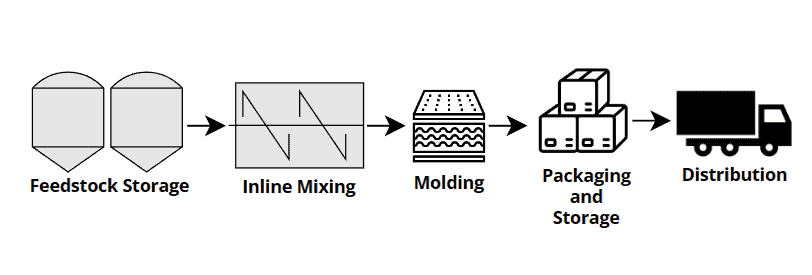
Polyurethane production process
Viscosity is an important parameter to monitor and control throughout the polyurethane production process. In step 1, the viscosity of the prepolymer affects its processibility. If the viscosity is too high, the prepolymer will be difficult to pump and mix. If the viscosity is too low, the prepolymer may not be able to support the weight of the fillers and additives that are added to it.
In step 2, the viscosity of the prepolymer and chain extender mixture affects the reaction kinetics. If the viscosity is too high, the reaction rate will be slow. If the viscosity is too low, the reaction rate may be too fast, which can lead to side reactions and defects in the final product.
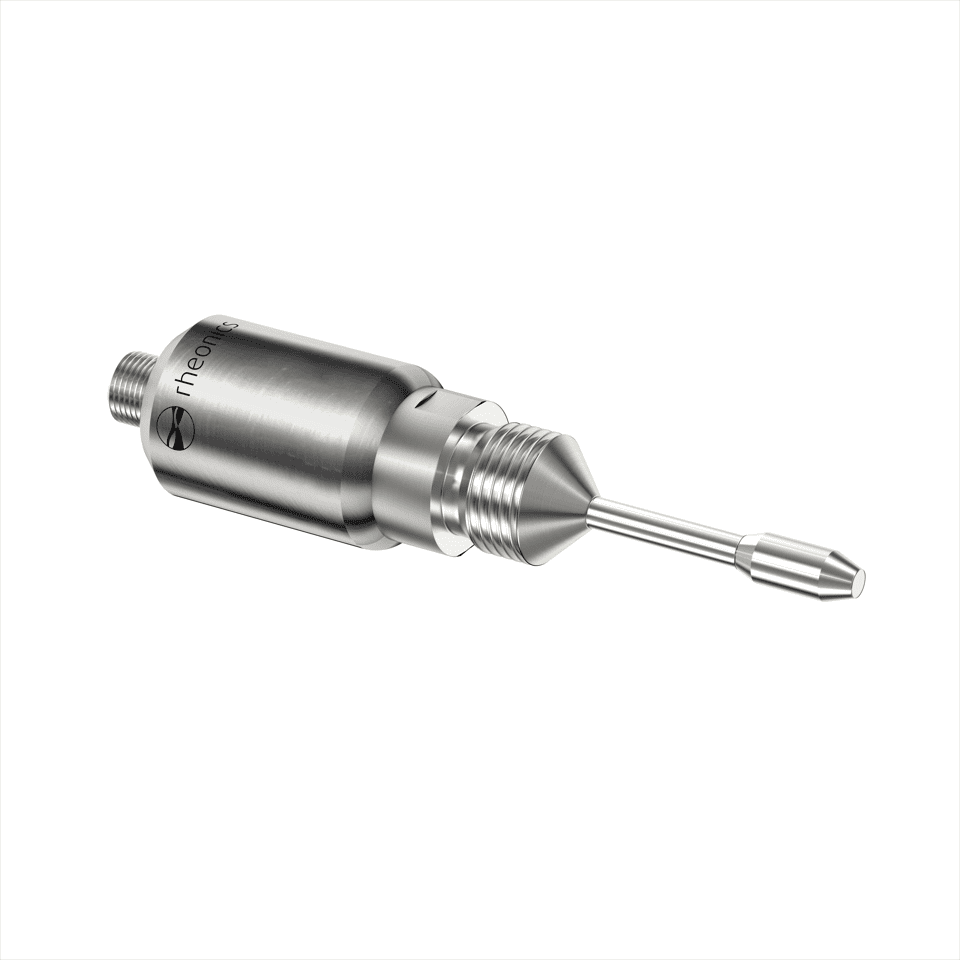
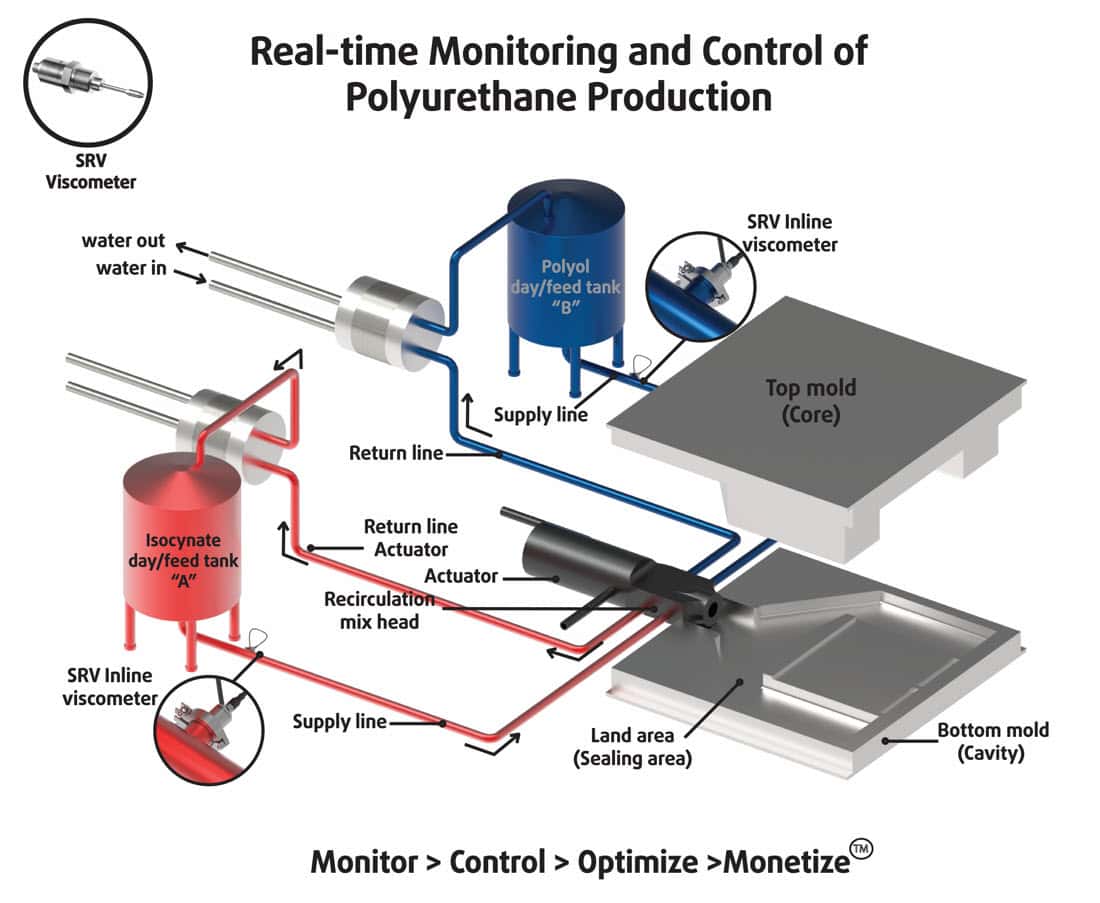
SRV Inline viscometer is used to monitor and control the viscosity of the prepolymer and chain extender mixture at various points in the polyurethane production process. For example, The SRV is used to:
Inline process viscometers are typically installed in a pipe or pipeline carrying the prepolymer and chain extender mixture. The viscometer measures the viscosity of the mixture in real time and sends the data to a controller. The controller can then be used to adjust the feed rate of the reactants or to add other additives to control the viscosity.
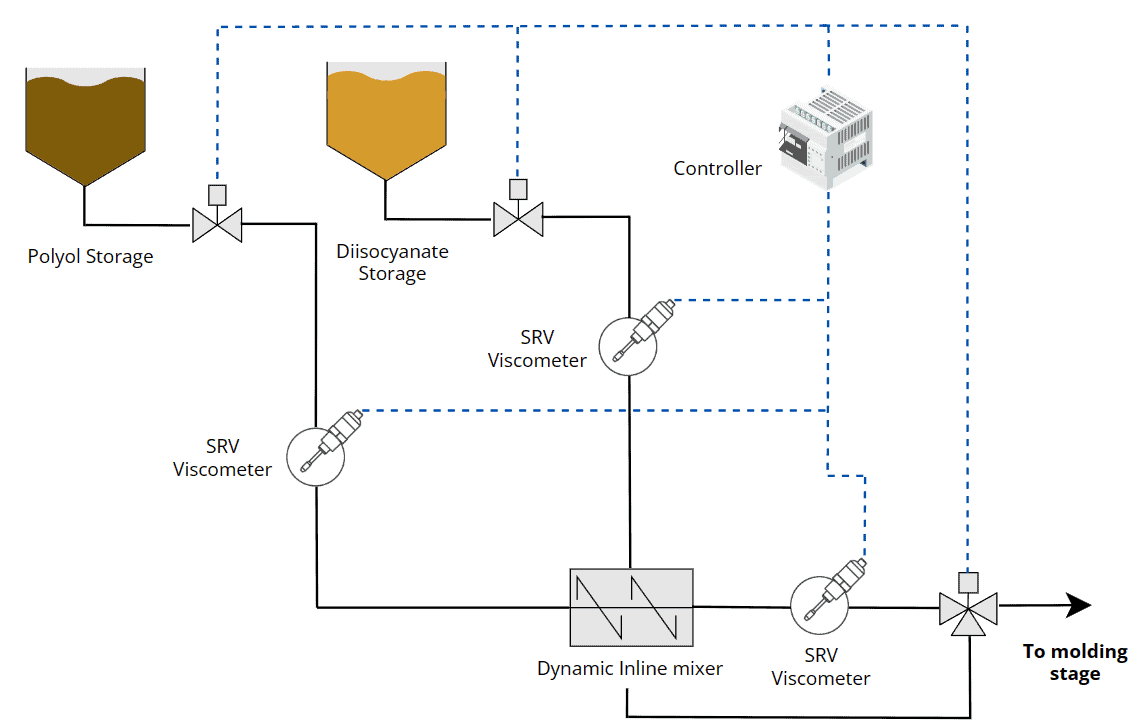
Inline process Viscometer SRV controls the viscosity of the feed products and the mixing result
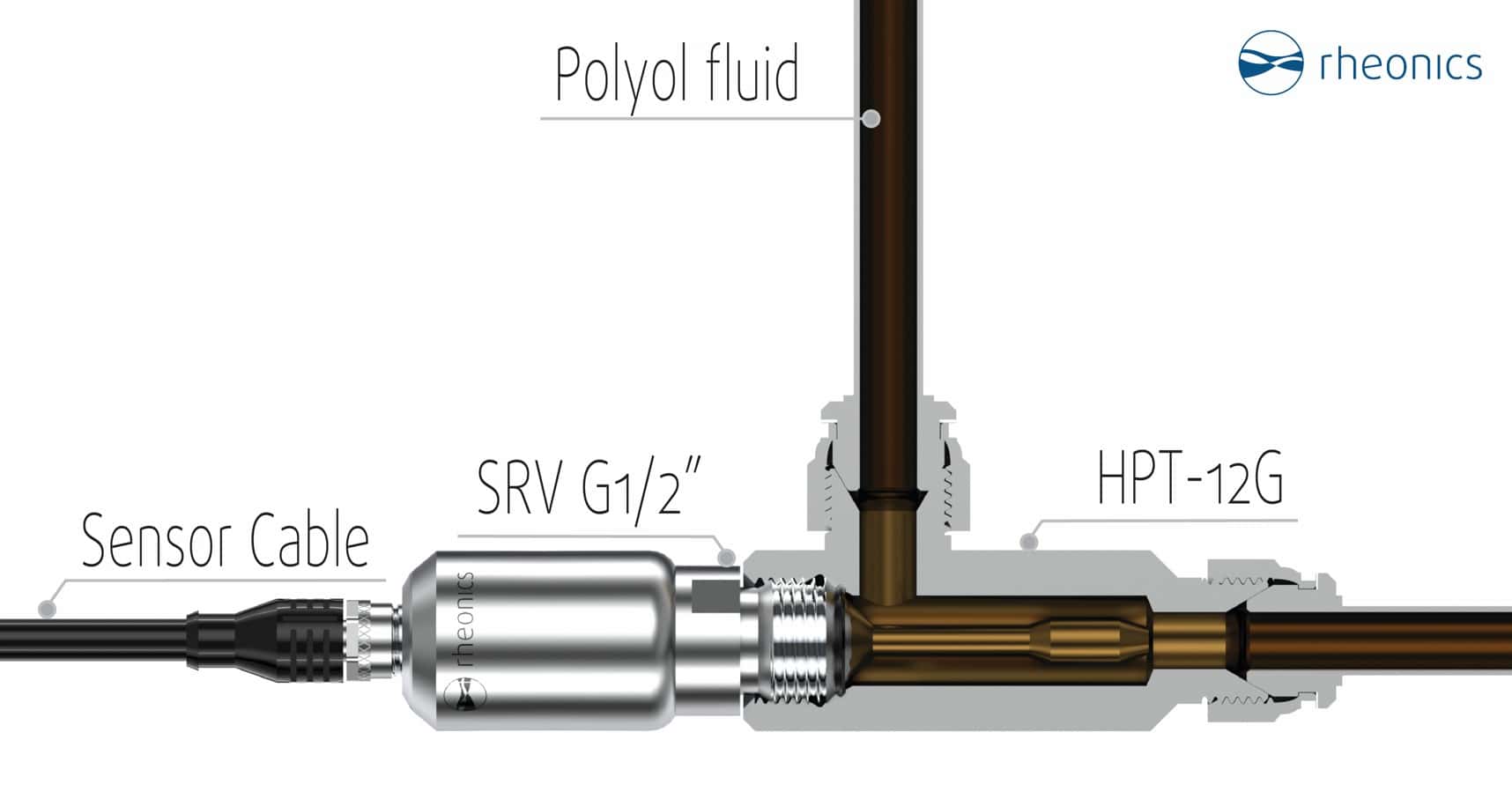
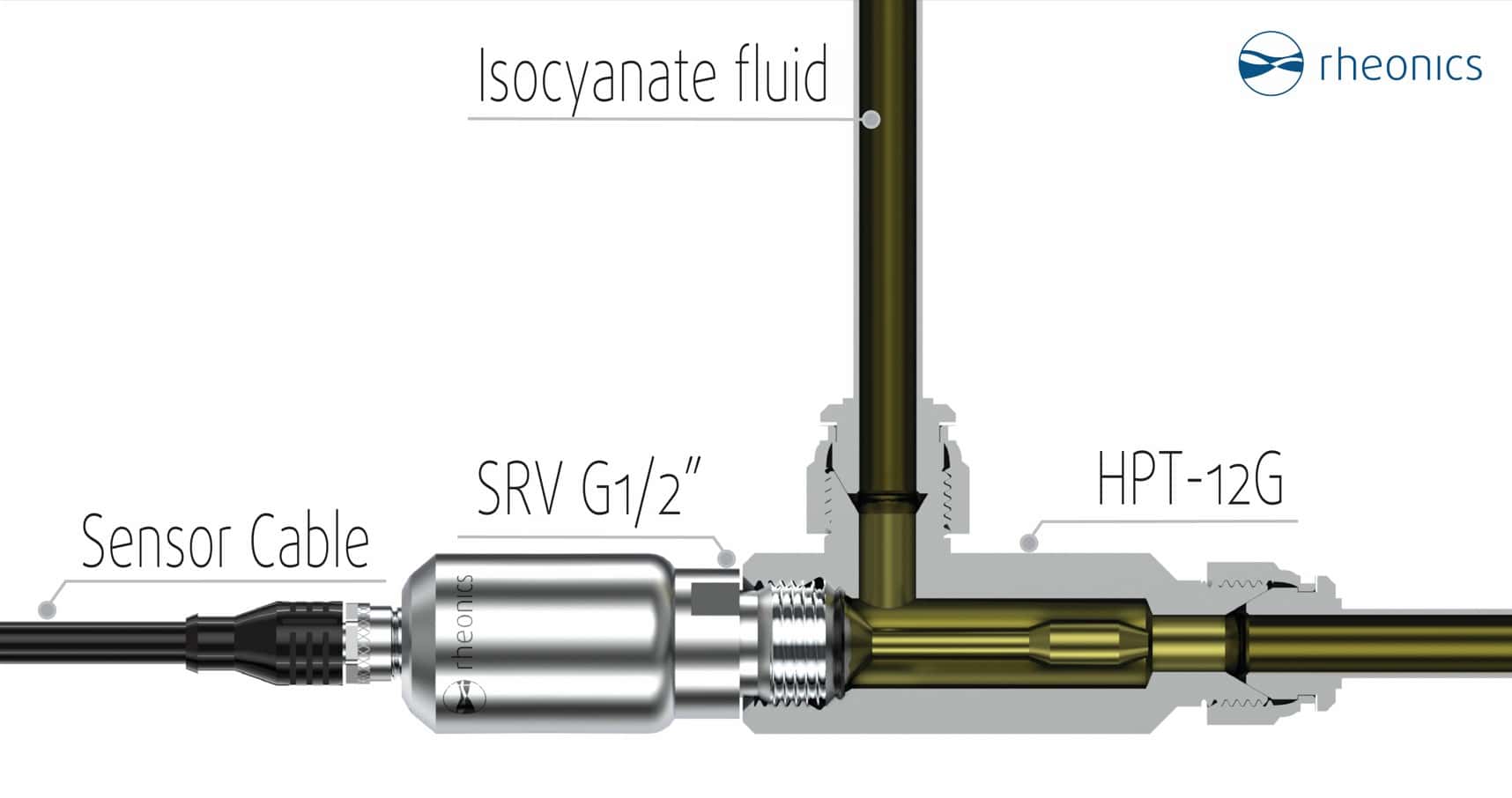
Key benefits to using SRV inline process viscometers in polyurethane production:
Overall, inline process viscometers like the SRV are a valuable tool for monitoring and controlling viscosity in polyurethane production. Real-time monitoring and control of the incoming raw materials, mixing process and reaction improve product quality, reduce waste, and increase efficiency.
Adhesive hotmelt’s viscosity is a critical property, as it directly impacts its ability to be…
In battery manufacturing, viscosity and density play a critical role in achieving consistent slurry quality,…
Slurry is a mixture of liquid and solid materials, that can have a fluid- or…
Key ways in viscosity & density measurements and management play central role in lube oil…
Adhesives and sealants are used widely for joining , protecting and sealing systems in construction,…
One of the largest areas of innovation and R&D in the automobile industry is the…