Why the evaluation matters
Selecting instrumentation for subsea, HPHT, and high-pressure service requires more than manufacturer specifications. Independent validation provides confidence that measurements remain accurate under real operating conditions.
TÜV SÜD National Engineering Laboratory (NEL), custodian of the UK’s National Standards for flow and density, evaluated Rheonics technology against traceable reference measurements.
Independent Evaluation Result
Rheonics was selected as the most suitable technology, with density tracking the reference to within the rig’s own measurement uncertainty.
If you are evaluating density or viscosity instruments for a demanding application, the questions that matter are practical ones:
- Will the accuracy hold up?
- Will the hardware survive my conditions?
- Will it install without becoming a maintenance project?
- Is it genuinely better than the alternatives?
Rheonics inline density and viscosity sensors were independently evaluated against those criteria by TÜV SÜD National Engineering Laboratory. The results are summarized below.
Does the accuracy hold up?
This is the question that decides a specification, and it is the one independent testing answers best. Measured against references traceable to UK national standards, Rheonics density tracked the reference to within 2.5% on all but one liquid-only point — a mean error of −0.06% ± 2.1% (95%). That difference was small enough to sit within the test facility’s own measurement uncertainty: an accredited national-standards laboratory could not separate the Rheonics reading from its reference by more than its own rig could resolve.
The evaluation demonstrated that Rheonics measurements closely matched traceable reference standards under test conditions representative of demanding industrial applications. For engineers and project teams, this provides independent evidence that the published performance specifications are supported by accredited third-party testing.
Will it survive my conditions?
Accuracy matters only if the instrument remains reliable in service. For subsea, HPHT, and high-pressure applications, survivability is just as important as measurement performance. The independent evaluation confirmed that Rheonics instruments are designed to operate across demanding pressure and temperature ranges while maintaining measurement integrity.
The evaluated instruments cover a wide range of operating conditions, making them suitable for applications where pressure, temperature, and long-term reliability are critical. This capability allows the same measurement platform to be deployed across upstream, subsea, and other challenging industrial environments.
Will it install and run — or become a maintenance project?
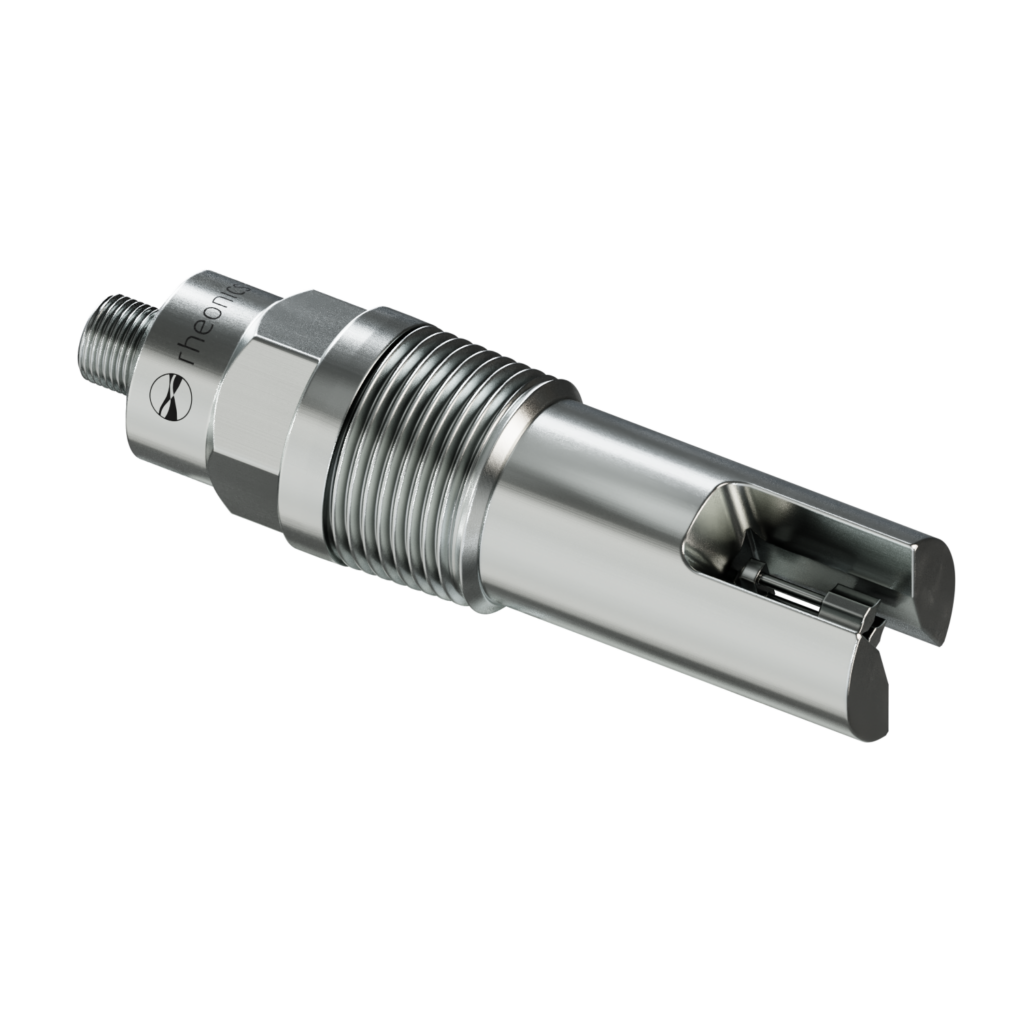
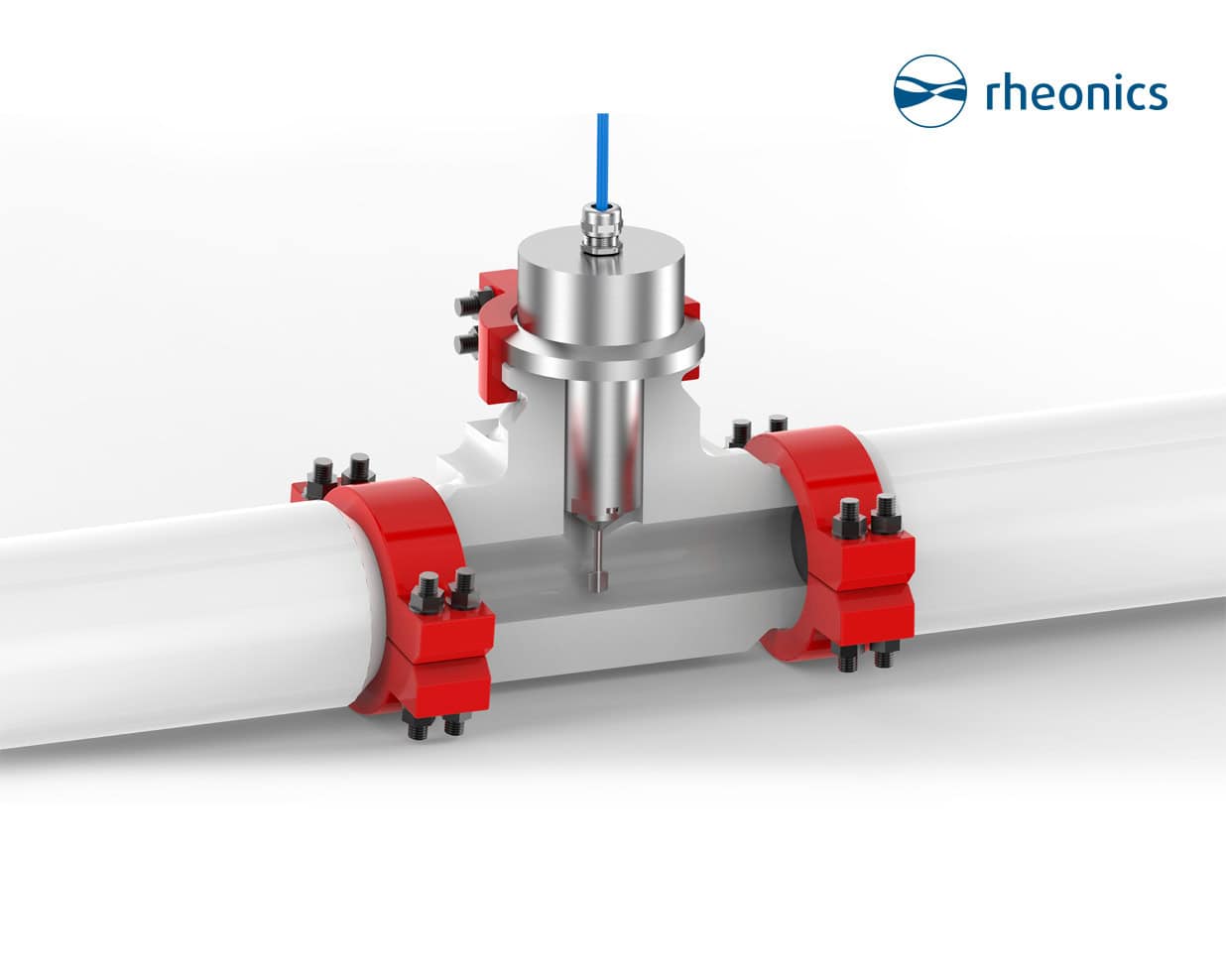
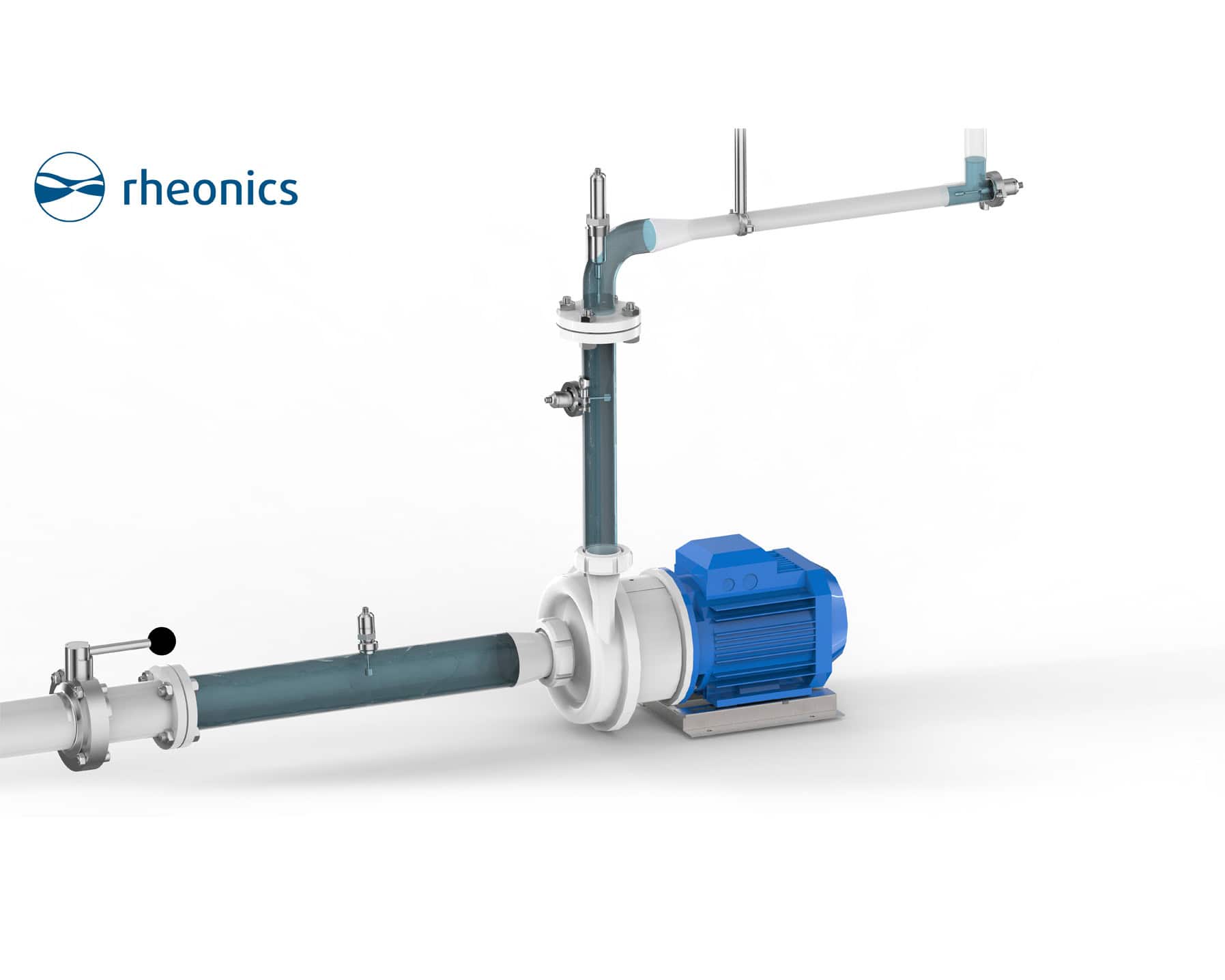
The Rheonics probe inserts straight into the line through a standard threaded boss and measures the real stream — no bypass loop, no sampling delay. That distinction was decisive in the study: the only other subsea-ready candidate needed a bypass and considerable specialist equipment, which risks measuring fluid that no longer represents the process. On the practical criteria you actually live with day to day — availability, robustness, and ease of implementation — Rheonics met the study’s requirements. A single probe with a small wetted volume is simpler to specify, mount, and keep running than a sampling system you have to maintain.
Is it genuinely the better choice among what I'm comparing?
That, in effect, is the comparison NEL ran for you. Reviewing the commercially available market and screening for subsea capability, the study found only two industry-ready candidates.
NEL evaluated both Rheonics instruments — the SRD and the DVP — and both met the study’s density requirements. The DVP, which adds gas capability and performs well with lower-density and cryogenic fluids, was selected as the most suitable solution for the subsea application. The only other subsea-ready system was eliminated due to its bypass requirements and specialist equipment, while the remaining technologies lacked subsea pressure capability.
Where Rheonics is the right choice — and where to pair it
Independent results are only useful if they are complete. Like every sensor in the study, Rheonics is a single-phase instrument: density and viscosity are proven in liquid and low gas-volume-fraction (GVF) flow. In high-GVF multiphase, no sensor in the study measured accurately — the route there is suitable mounting and pairing with a phase-distribution check. For single-phase and low-GVF liquid service at subsea and high-pressure conditions — the conditions most evaluations are actually about — Rheonics delivered the accuracy and field robustness a national-standards laboratory was looking for. Knowing exactly where an instrument fits is part of choosing the right one.
Where this fits in your operation
If you are responsible for measurement, metering, or production assurance, this independent validation supports the capabilities Rheonics instruments are designed to deliver in demanding industrial environments.
With hazardous-area approvals and wetted-material options including 316L stainless steel and Hastelloy C22, the Rheonics platform supports demanding oil & gas, petrochemical, and process-industry applications. The result is a measurement solution backed by both field performance and independent validation.
Three Instruments. One Validated Platform.
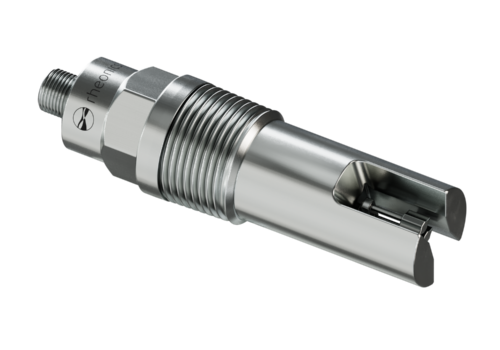
NEL evaluated both Rheonics inline density and viscosity instruments — the SRD and the DVP — and confirmed they met the study’s density requirements. Both instruments share the same resonator measurement technology and electronics platform, allowing users to select the best configuration for their application without changing integration or operating principles.
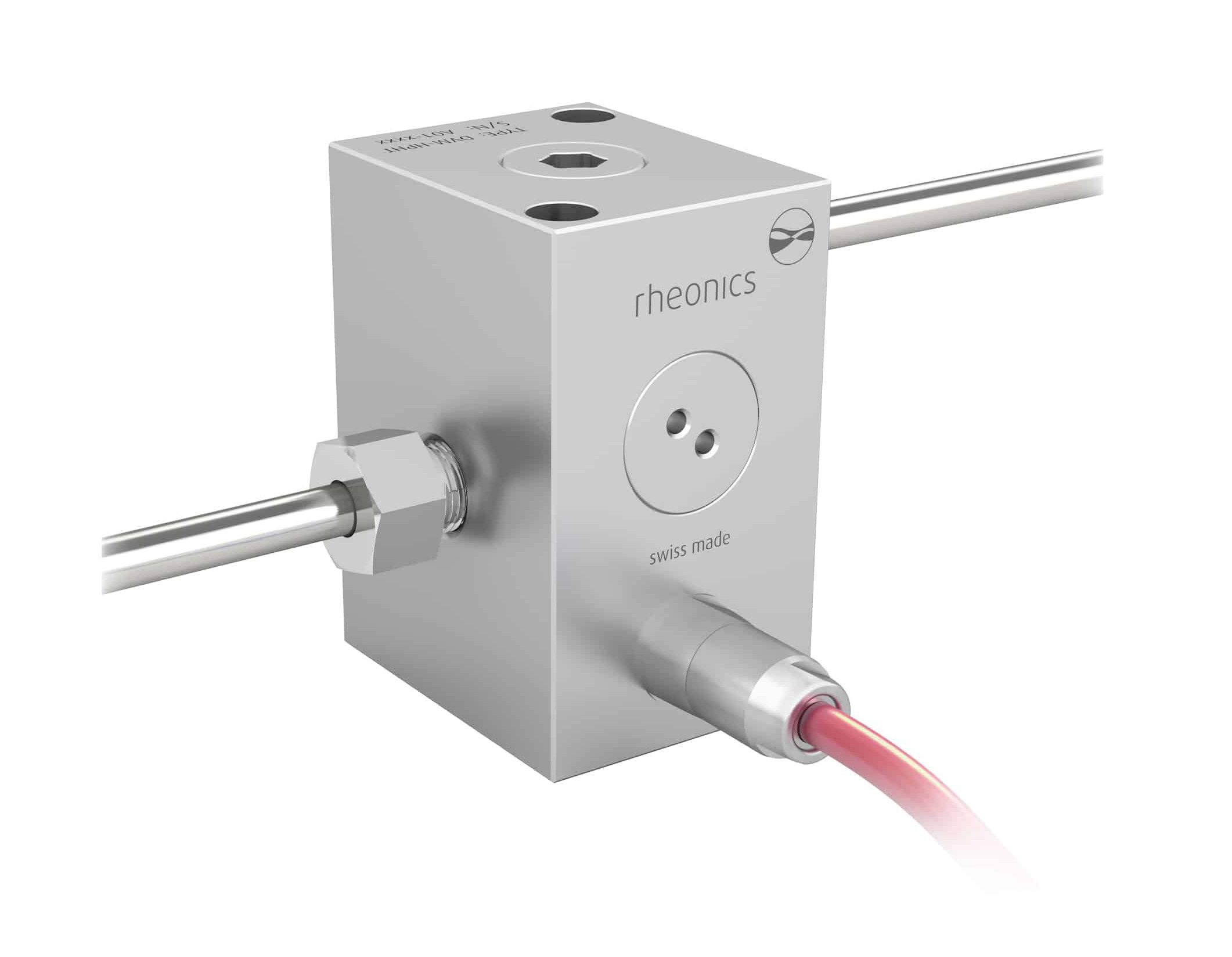
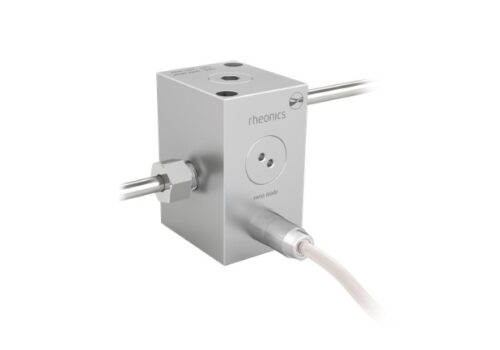
The DVM extends the same technology into a flow-through cell designed for reservoir-condition fluid analysis.
Why SRD Stands Out
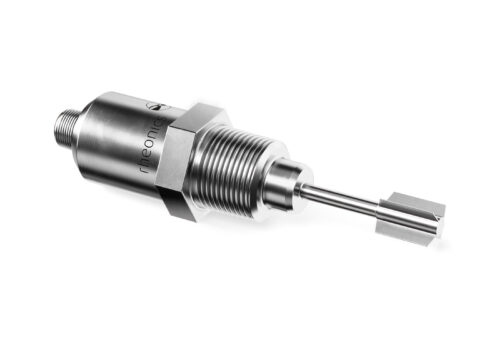
One instrument supports multiple process connections including NPT, Tri-Clamp, EHEDG, DIN, Ingold, Varinline and long-insertion configurations.
Because the sensor is largely insensitive to mounting orientation and installation conditions, successful deployments can often be replicated without major re-engineering.
| Specification | SRD | DVP | DVP (not in study) |
|---|---|---|---|
| Best for | Inline liquids — density, viscosity, concentration | Gas, LNG & lower-density / viscosity fluids | Reservoir-conditions PVT / EOR |
| Form | Insertion probe | Insertion probe | Flow-through cell |
| Density range | 0 – 4.0 g/cc | 0 – 1.5 g/cc (incl. gas) | 0 – 1.5 g/cc |
| Density accuracy | 0.01 g/cc std → 0.001 g/cc | 0.001 g/cc (≈ 1 kg/m³) | 0.001 g/cc |
| Viscosity range | 1 – 3,000 cP (wider available) | 0.2 – 300 cP | 0.2 – 300 cP (lower available) |
| Viscosity accuracy | 5% of reading (1% available) | 5% (±0.1 cP < 1 cP) | 5% (±0.1 cP < 1 cP) |
| Pressure | to 1,500 bar (20,000 psi) | to 1,000 bar (15,000 psi) | to 2,100 bar (30,000 psi) |
| Temperature | −40 to 285 °C | −40 to 200 °C | −40 to 200 °C |
| Wetted material | 316L SS · Hastelloy C22 | Titanium Grade 5 | Titanium Grade 5 |
| Installation | Modular — any connection; mounting-insensitive | 1" NPT, flange, Tri-Clamp | Flow-through (oven / bath) |
Global Certifications & Calibration
Rheonics instruments are certified for hazardous-area operation worldwide and supported by NIST-traceable density and viscosity calibration.
Independent Validation Report
In-Situ Fluid Property Measurement
Industry Recognition
Rheonics technology has been recognized by leading industry organizations for innovation, measurement excellence, and industrial process solutions.


Supporting Documents
| Resource | Description | Link |
|---|---|---|
| Subsea Density & Viscosity Validation | Independent evaluation of Rheonics density and viscosity sensors for subsea and high-pressure applications conducted by TÜV SÜD National Engineering Laboratory. | Download |
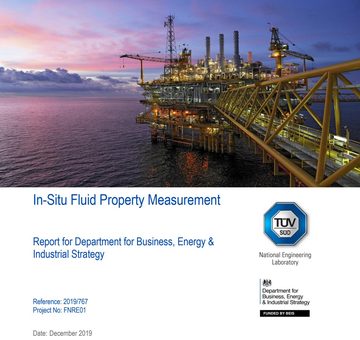
| TÜV SÜD NEL Independent Validation Report | Original third-party report: In-Situ Fluid Property Measurement, Report 2019/767, commissioned by the UK Department for Business, Energy & Industrial Strategy. | View Report |