Drilling Mud Weight and Viscosity Monitoring to Optimize Well Performance
Drilling mud density and viscosity are critical parameters that directly influence drilling performance, borehole stability,…

Fluid cooling systems are an essential component in data center technology. As the power density of data center processors increases, coolant performance becomes a critical link in the reliability and lifetime of processors and other essential components.
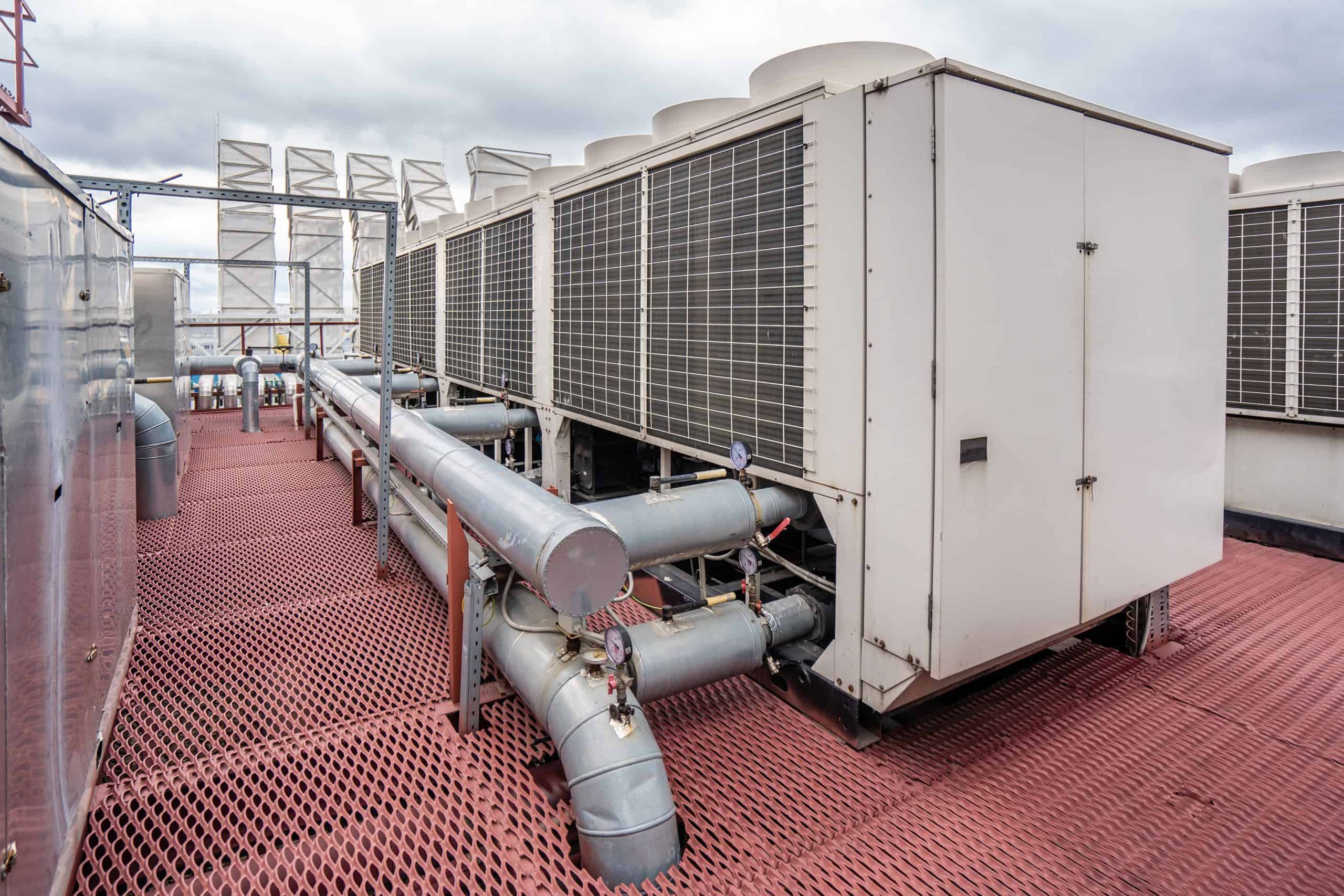
Figure 1: Refrigerant Machine.
Table of Content
The most widely used coolants are solutions of glycols and water, together with degradation and corrosion inhibitors to prevent coolant failures and corrosion of electronic and piping systems. Therefore, accurate and sensitive monitoring of glycol-based coolant condition is a crucial link to ensure the reliability and stability of equipment.
There are several methods currently used for monitoring of coolant condition. They measure two critical aspects of coolant properties:
Optimal monitoring of coolant condition should be a continuous online process whose reliability and stability should be maintained without calibration over the lifetime of the sensor.
Rheonics SRV is a compact, robust inline viscosity sensor that can reliably monitor viscosity and temperature of coolants directly in the coolant line. It can also detect and quantify material deposited by coolant, that give an early indication of corrosion products, biofilm formation, and other degradation processes.
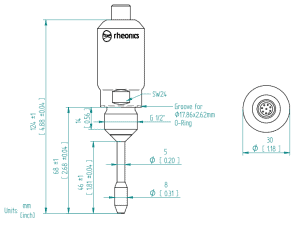
Figure 2: Dimensions SRV Inline Viscometer G1/2″ Thread.
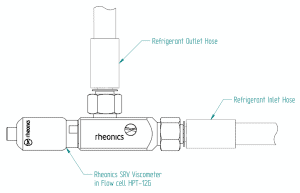
Figure 3: SRV mounted in HPT-12G for coolant line
SRV is exceptionally stable. Its factory calibration remains valid over its 25+ years of lifetime, therefore never requiring recalibration. Its resolution is better than 1% of viscosity reading. Reproducibility of readings is also better than 1%, making it perfect for tracking both short- and long term trends in coolant properties with a high degree of confidence. SRV incorporates a high accuracy temperature sensor immersed directly in the coolant that enables robust and accurate temperature compensation of viscosity readings. SRV further incorporates a self-checking function that indicates if the sensor has accumulated any deposits on its surface, from, for instance, corrosion products or adherent biofilms that can indicate chemical or biological degradation. Deposition checking functions independently of viscosity measurement, and can provide additional, crucial information about coolant condition.
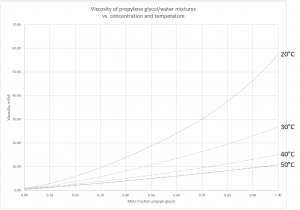
The SRV’s ability to resolve very small changes in viscosity, supported by its temperature compensation capabilities, means that it can supply accurate and stable measurements of glycol concentration despite possible large temperature variations.
The SRV delivers continuous viscosity measurements without operator attention. Laboratory analysis is time- and resource intensive, and can only deliver periodic results, often with a long time lag between sample extraction and final laboratory report.
The SRV is intrinsically stable over years of operation. Electrochemical processes like conductivity and pH measurement can be done online, but stability and accuracy of sensors can be compromised by deposition and degradation of the sensors themselves.
The SRV factory calibration remains unchanged over the 25+ years of lifetime of sensor. Electrochemical sensors need frequent calibration to ensure reliable measurements
The SRV temperature compensation is built into the sensor; conventional evaluation methods usually require an auxiliary temperature measurement in order to compensate for temperature-dependence of the measurement.
The SRV is capable of detecting changes in the concentration of glycol in coolant systems. It is also capable of detecting deposits caused by contaminants, biofilms, and corrosion products.
As information becomes available about the performance of SRV in actual coolant monitoring environments, the Rheonics support team is positioned to develop smart alert systems to warn of changes in coolant properties
Continuous measurements under varying conditions make extensive data available about the sensor’s response to changes. When changes are seen in the SRV output and deposit detection, this can trigger laboratory tests to determine the source of these changes. Taken together with the SRV data signature, these will provide inputs to machine learning algorithms that can more accurately evaluate trends in viscosity and deposition that, in turn, can provide a more accurate understanding of coolant performance and lifetime.
Rheonics SRV sensor includes the powerful electronics called SME – Sensor Module Electronics. Rheonics SME handles the measured data from the probe, transforms it to readable values, and transmits it through multiple industrial protocols, such as the analog 4-20 mA signals and more robust digital protocols like Profinet, Modbus RTU and TCP, Ethernet/IP, HART, etc. which makes the sensor very easy to integrate into local monitoring or control systems.
Clients can rely on the Rheonics Integration Team for assistance with communication settings and, if needed, remote configuration, to ensure a smooth integration.
Drilling mud density and viscosity are critical parameters that directly influence drilling performance, borehole stability,…
Density and Concentration are critical parameters in Brine Lithium Extraction process for monitoring and control…
The ability to monitor the level of sand in desanders, separators, and flowback systems allows…
For process engineers, it's essential to develop an efficient and reliable method to monitor and…